
How To Design A Down Parka
A new jacket from Sitka Studio is a masterclass in combining cutting edge technology with timeless style. And it’s probably less than half the price you think it’s going to be.


Combining a large volume of ultra high fill-power goose down with a windproof membrane, and two new technologies, this new jacket would be a standout if it was made by any brand. But it’s not made by just any brand, it’s the first-ever independent design from Sitka Studio, an offshoot of the high-tech hunting apparel maker designed to showcase that company’s capabilities to the rest of the world. And man, it makes some legacy players in the insulated outerwear space look silly.
Today’s a national holiday, and I’m trying to catch up after a slow week last week. Slow for me, not news around the outdoors obviously. I took a few days off to go visit the in-laws and play with our nieces, ahead of what’s going to be a really momentous period for public lands, and some of the bedrock legislation that supports the North American Model for Wildlife Conservation. I’ll be covering all that and more every day over the coming weeks. But in the meantime, I wanted to tell you about this jacket, because I think it merits the attention, and represents the start of what I hope will be a more significant effort from Sitka to reach an audience outside of hunting.
If you’re unfamiliar with Sitka, it was the first modern attempt to create a high-tech apparel company in the hunting space. Before Jason Hairston and Jonathan Hart founded the company in 2006, you had camo, and you had technical wear. Sitka put the two together. Gore (the parent company of Gore-Tex) acquired Sitka in 2010, and it’s since functioned as sort of an off-site development lab for finding unexpected applications for the technology Gore spends nearly half-a-billion dollars a year developing. And yes, that does sound like something relevant to the wider world outside of hunting to me, too.
Mike Ekstrom, the product line manager for Sitka’s new footwear division, describes the company as “a startup within the most innovative clothing technology company.” And that’s why Sitka attracts talent like him, clothing designer John Barklow (who I end up mentioning in every article I write), and creative director Brad Christian, who’s been spinning up Sitka Studio with a line of really cool collaborations over the last few years. Brad designed an outdoor chef’s knife with the James Brand, a guitar with Martin and Thomas Rhett, some snowboard shells, a camera strap, and the best bow case ever in collaboration with also Bozeman-based Mystery Ranch.
But Sitka is, at its core, a clothing company for, “people who live outdoors,” according to Brad. And Sitka Studio had yet to apply the full weight of its parent brand’s competency into a piece of clothing normal people would want to wear. Enter this parka.
It’s clear that Brad shares my frustration with parkas made by more mainstream brands. Essentially just a way to apply as much down insulation to your upper body as possible, existing parkas tend to be a mixture of really low quality down, suboptimal housings, and extremely high prices. Let’s walk through the various materials and technologies involved here, and use that to explain why legacy parka brands suck, and what makes Sitka Studio’s Hyperdown jacket so unique.
Fill Power: This is the number of cubic inches one ounce of the material in question is capable of lofting to fill. Fill power is a measure of compressibility and not, as is widely believed, an indication of warmth. Higher fill power downs are typically more expensive than lower fill powers.
Most parkas are made using 600 to 650-fill, which is the same quality down you’ll find in budget coats from brands like Eddie Bauer and Columbia. The Sitka Studio Hyperdown uses 900+-fill, which is the highest power you’ll typically find in outerwear. There is such a thing as 1,000-fill, but most of that ends up getting bought up by the luxury bedding industry, and only occasionally finds its way to small runs of outerwear. That stuff commands a premium out of sync with its performance benefits, you’d struggle to notice a difference between 900+ and 1,000.
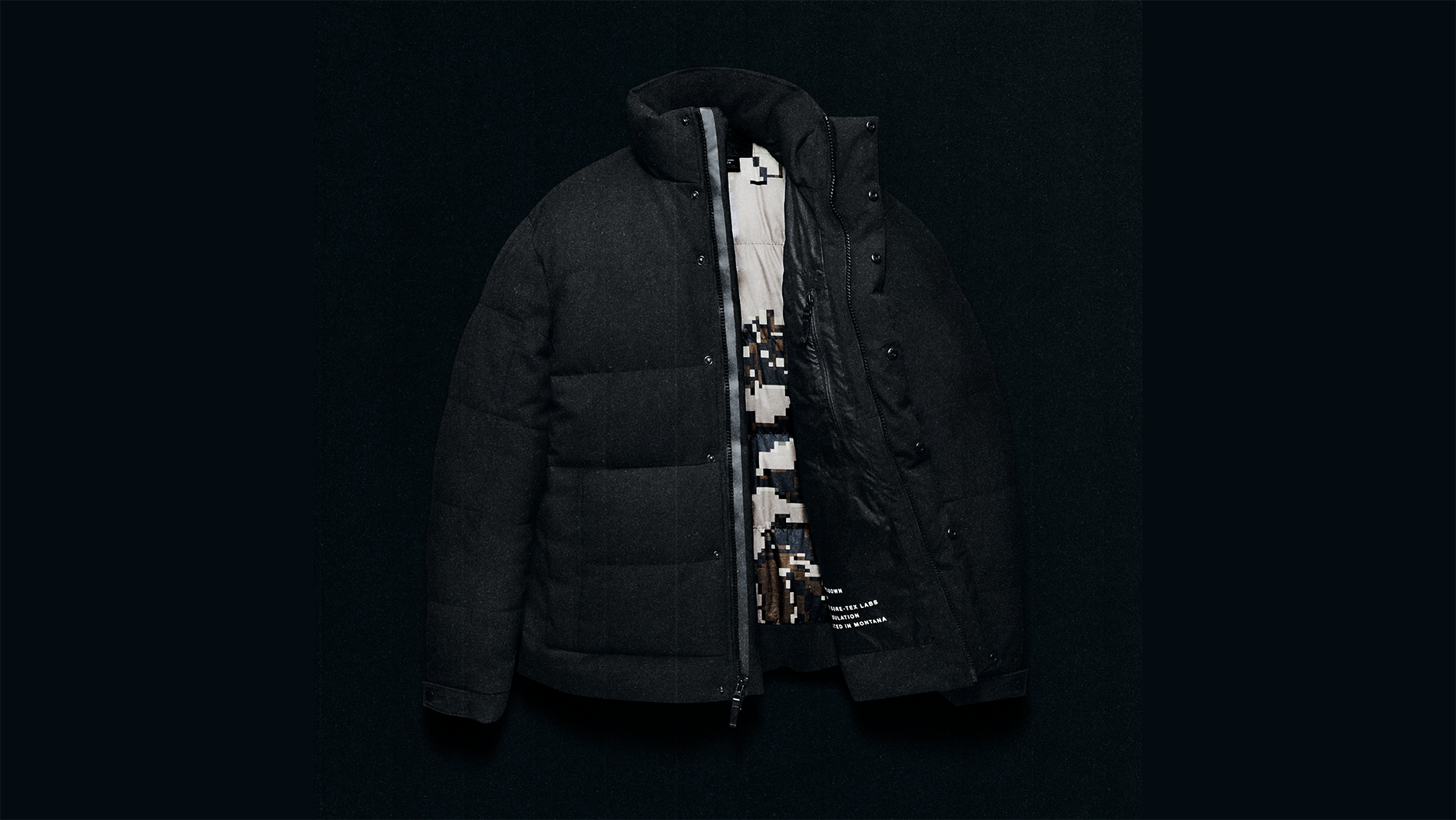
The blown up Optifade Open Country camouflage pattern is a nod to Sitka’s past. And don’t worry if you’re not the type to wear camo, it only appears on the back panel, and not the insides of the front.
Fill Weight: As simple as it sounds. This is how much down is used inside a jacket (typically for a size medium) or other item. Combining fill weight with fill power also gives you an idea of how warm one jacket is going to be, compared to another.
Take a typical high-end parka like the Canada Goose Expedition Parka Heritage. It uses 250 grams of 625-fill power down. this Sitka Studio piece uses 230 grams of 900-fill. 8.8 ounces times 625 equals 2,200 total cubic inches of crappy down in the Canada Goose. There’s 7,290 total cubic inches of really good quality down in this Sitka Studio jacket.
The fact that the Sitka Studio Hyperdown includes over three times the amount of down compared to the Canada Goose Heritage is even more impressive when you consider that the former is one quarter the price of the latter. And the comparison gets even more uneven when you remember that Canada Goose is including a hood in that total fill weight.
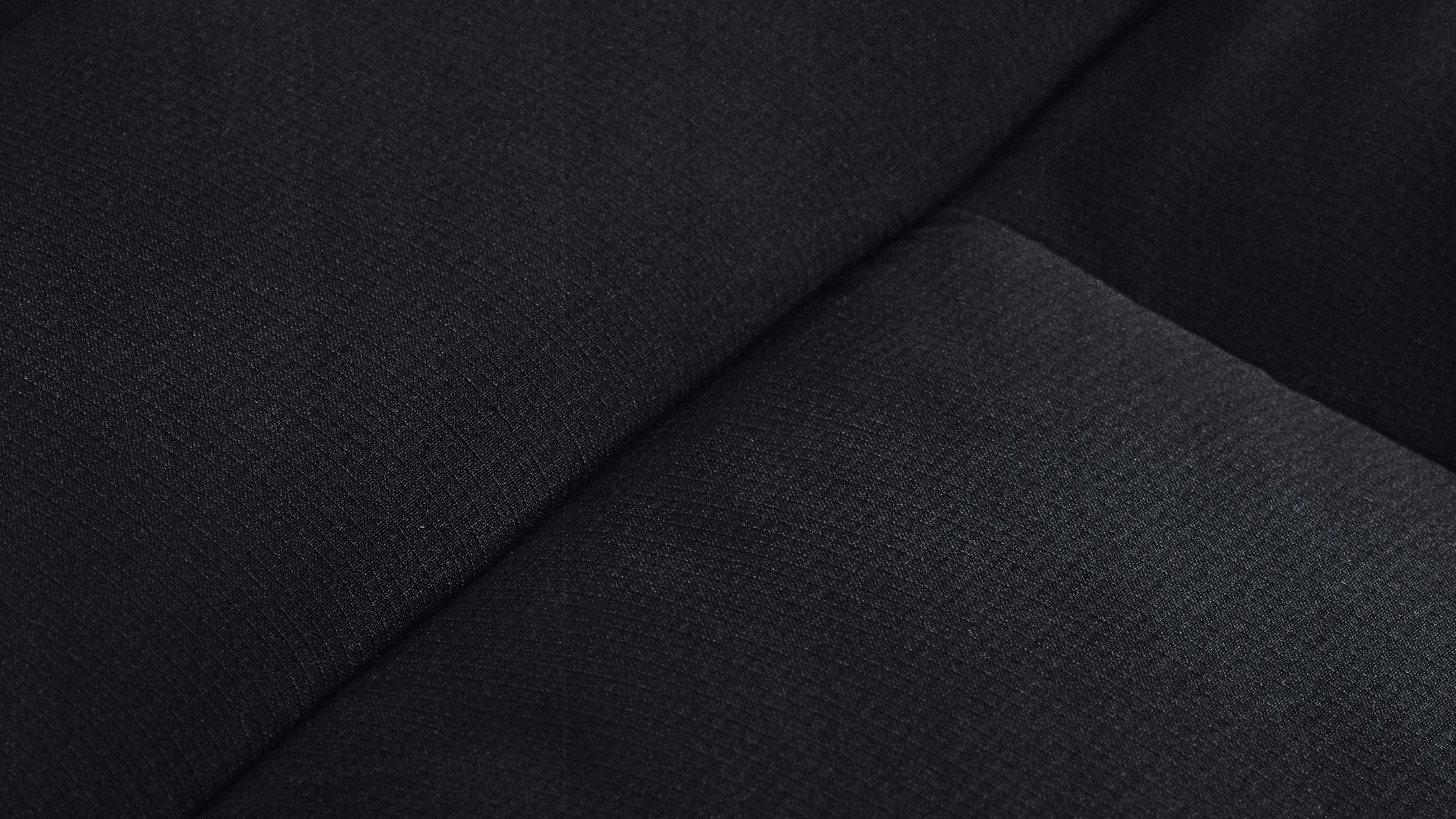
The Japanese ripstop shell is light but durable.
Shell Fabric: The job of a shell is to keep weather out and down in. Most parkas are equipped with thick poly-cotton blend canvas outer, and thin nylon inner face fabrics. And while this is a great solution for durability, canvas provides minimal weather protection. Because it’s thick and heavy, canvas is not typically very packable.
So that same Canada Goose Heritage weighs about 4.5 pounds total, and packs so large you likely wouldn’t be able to fit in carry-on luggage by itself.
Brad’s taken the opposite approach with the Hyperdown, equipping it with not only a light-but-durable 60-Denier, Japan-sourced ripstop nylon outer face, but backing that with Gore’s latest ePE Windstopper membrane. The innovation there is the environment—there’s no PFCs—but that is achieved with equal durability to older ePTFE membranes.
So not only is the Sitka Studio jacket vastly more packable than the more expensive Canada Goose (my medium packs down to about the size of a basketball), but it will also much more strongly resist convective heat loss and precipitation.
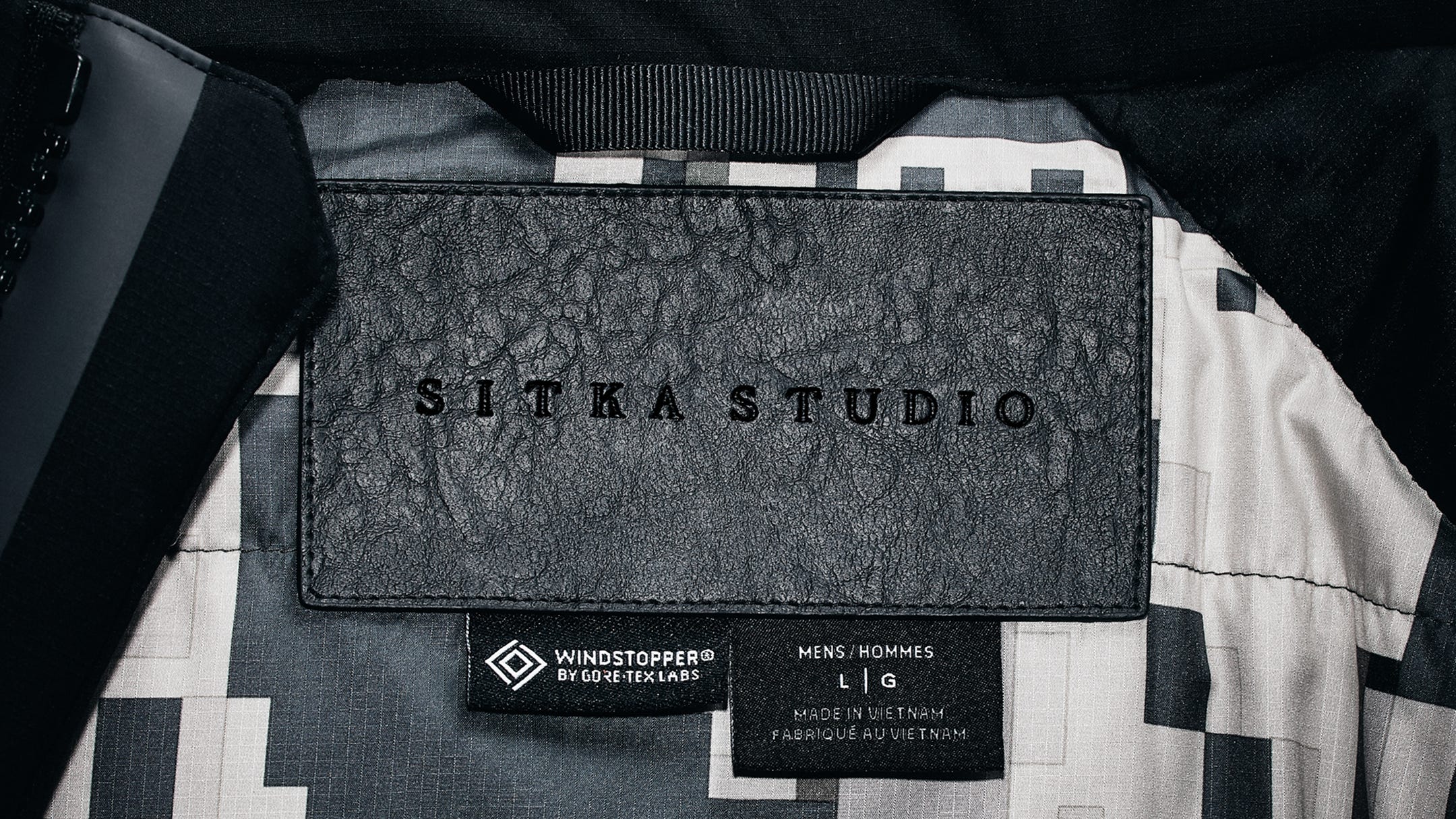
Locker loop? Check. Zipper shielded by a flap inside, and out? Double check.
Down Treatments: There’s more to the quality of down that I can dive into now, but suffice it to say that the stuff you buy for $59.90 at Uniqlo is not as good as the stuff we’re talking about here. And one of the factors there is in the treatment applied to the down clusters to ensure they’ll be able to retain loft when damp, or regain it after being submerged. And believe it or not, this is where the Sitka Studio jacket starts to get exciting. Instead of chemical treatments, it uses actual gold.
Brad’s sourced the insulation from Allied Feather + Down, which supplies some of the highest quality down out there. And this new ExpeDRY down uses that company’s latest technologies.
By bonding gold particles to the down clusters, Allied is not only about to create a non-toxic, planet-friendly water repellant finish, but one it says tests out with dry times one-third to half as long as rival technologies. Not only will items made from ExpeDRY recover warmth faster after getting soaked, but they’ll also remain drier and therefore warmer when exposed to the escape of your body’s hot, moist air through the system. So Allied claims they’ll feel drier and warmer to wear. As a bonus, the gold bonding is permanent, so will last the life of the garment.
My experience with the jacket bears that out. It was as cold as -25F in Bozeman last week, when I first received a size large. And wearing that over a thick mid-layer (Sitka’s Ambient 200) not only proved warm enough for those conditions, but returned a feeling of cozy dryness absent from other winter coats in my arsenal. I just threw on the size medium that showed up on my porch today to run to the florist for a late Valentine’s bouquet. It’s six degrees and the HyperDown was more than warm enough over a merino t-shirt. Wearing this thing feels good in a way that defies many of my other insulation pieces.
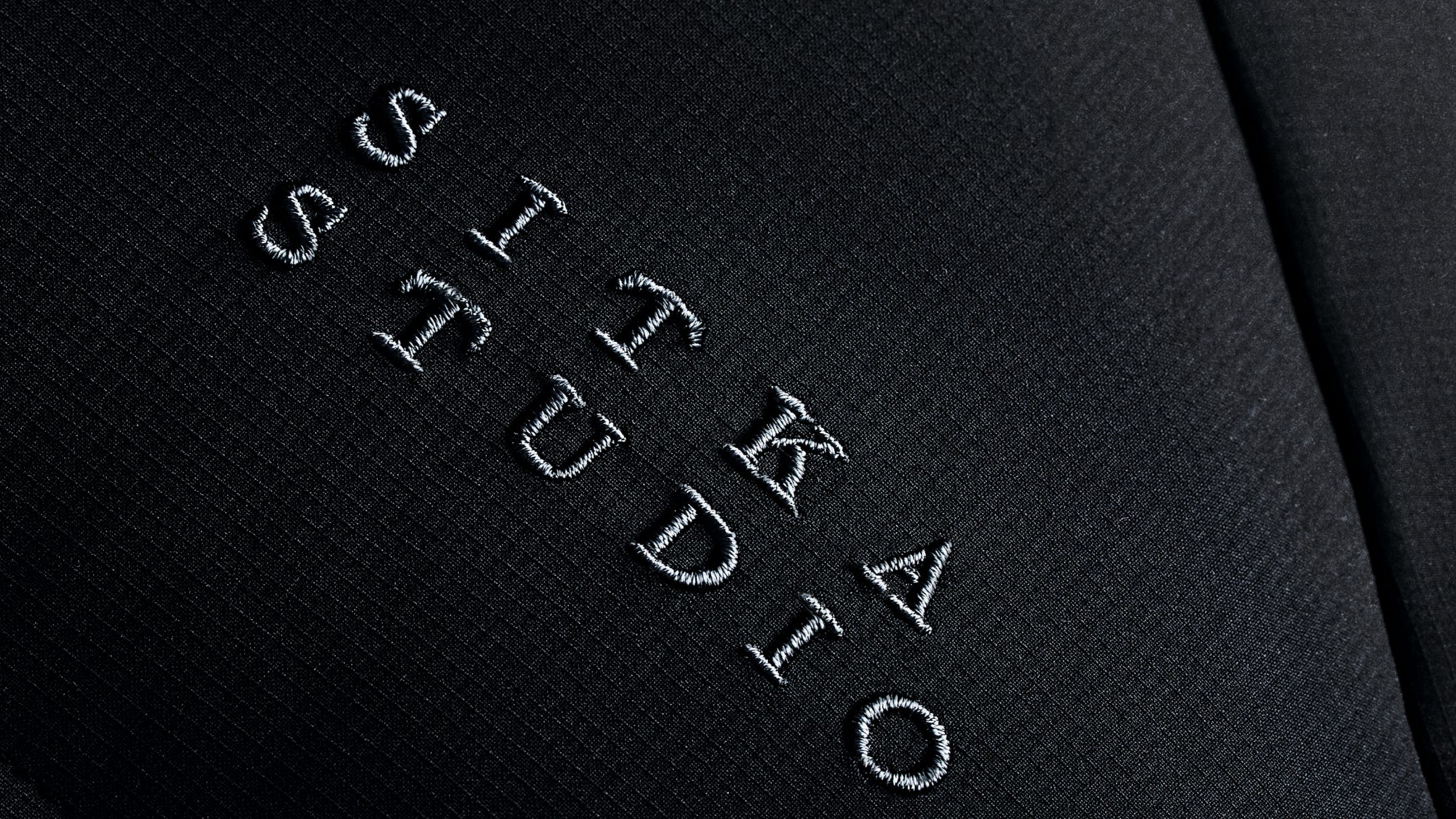
Branding is minimal, restrained, and kept to the right rear shoulder, only. Thanks Brad, I really am wearing this thing out to dinners.
Features: Beyond simply materials, factors like fit, pockets, etc can add up to make or break a jacket.
We should discuss sizing first. I’m 6’2” and currently about 185 pounds (I haven’t lifted since October), I exist in an awkward space between a medium and large for most brands, including Sitka. They say this jacket features an oversize fit to enable layering, but since the jacket doesn’t really need much underneath, I’m finding the medium is the much better option. Everyone congratulate my friend Connor on his next hand-me-down.
There is one more glaring problem with the Hyperdown: Its pockets are so warm I’ve been running around town in frigid temperatures without gloves. And when I stopped to fix a nice woman’s Land Cruiser the other day, that meant I gave myself frost nip in all my finger tips while handling metal tools. Not only do the zippers open to reveal a space for your hands inside the down insulation, but those pockets are lined with high-pile fleece for extra coziness.
Brad kept the left side interior of the jacket’s lining plain to create a space for branding, but the right side features an oversize mesh dump pocket for gloves. So I really have no excuse for forgetting mine. There’s also a zip Napoleon pocket for your phone.
And that’s about it. There’s no hood since this is more a piece for travel and casual wear than it is one designed only for arctic use. And, more importantly, there’s no giant, ugly Sitka logo on the chest. Brad says he left that off after he heard me bitch about it on Sitka’s regular line of clothes.
So what kind of money are we talking here? You’re probably expecting something in line with Canada Goose’s $2,000 price tag. But this Sitka Studio Hyperdown is actually just $500. If you want one, you should hurry. They sold out of some sizes last week, just after launch, but restocked from a very finite supply pulled from their brick and mortar inventory.
“This jacket represents where Sitka Studio is headed,” Brad says. “It’s about bringing technical expertise to modern interpretations of classic designs.”
Wes Siler is your guide to leading a more exciting life outdoors. You can read more about what he’s doing on Substack through this link. Want to read more articles like this one? Consider supporting independent journalism through a paid subscription.
Weird time of year for this launch when everything winter related is going on end of season sales
Hold on… dibs on the large??? 😬