
Will Extended Range Electric Pickups Be The Ultimate Truck For Preppers?
Electric propulsion combined with onboard gas generators promise to open up a whole new world of capabilities off-grid

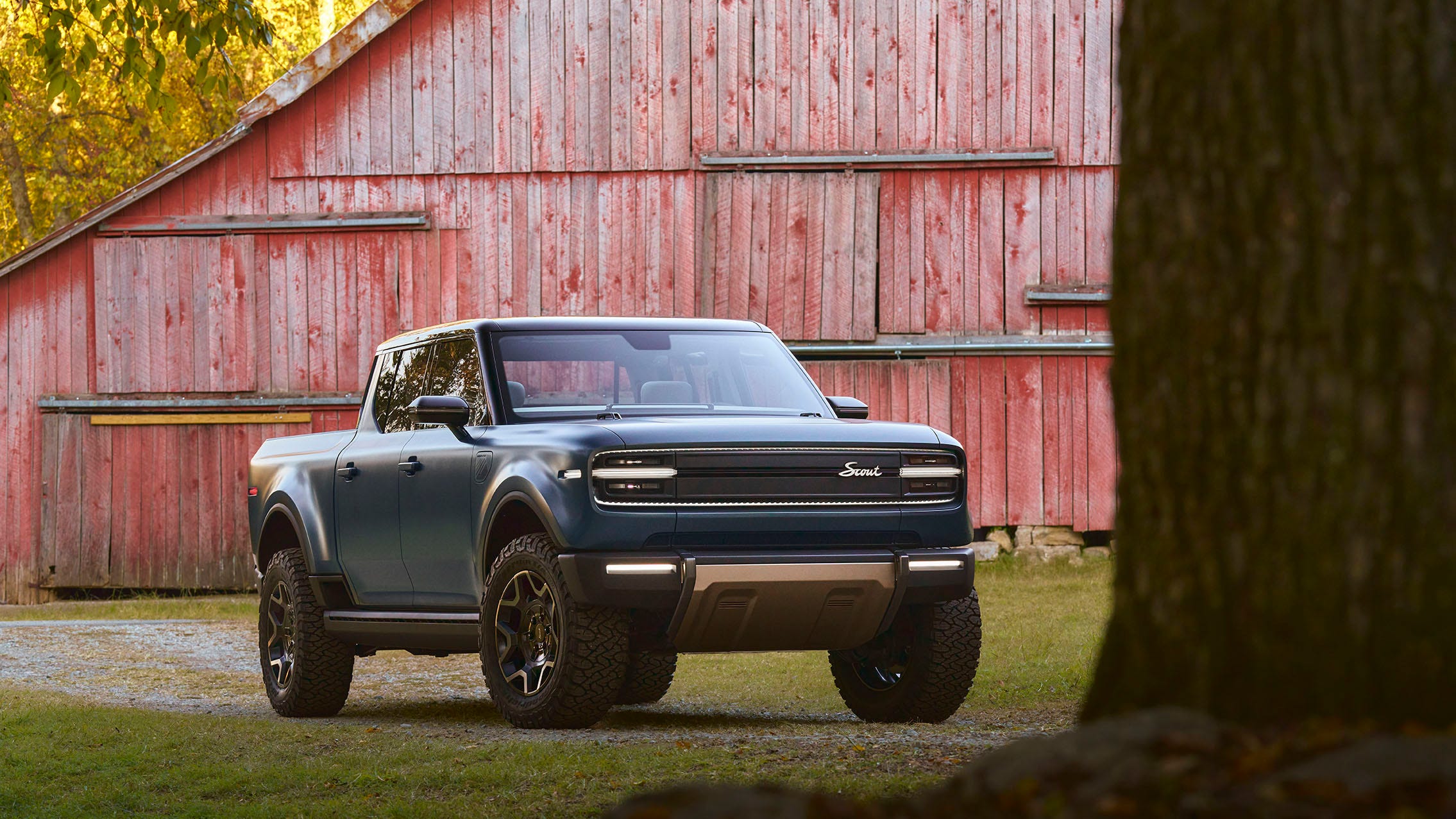
Upcoming Extended Range Electric Vehicle (EREV) pickups from Scout and Ram will combine the performance of electric power with the range of internal combustion. And while their headline capability will open up travel through remote areas and daily use in austere environments to EVs for the first time, I’m mostly excited about another possibility: off-grid power.
Believe it or not, but I’m also overwhelmed and depressed by the torrent of bad news about public lands, national parks, and the environment. So I figured I’d put down work on upcoming articles about the Forest Service and National Environmental Policy Act, and instead write about something fun today. Stay tuned though, I’m hearing that an executive order around reducing national monument protections, and opening up BLM land to sell offs could come any day now.
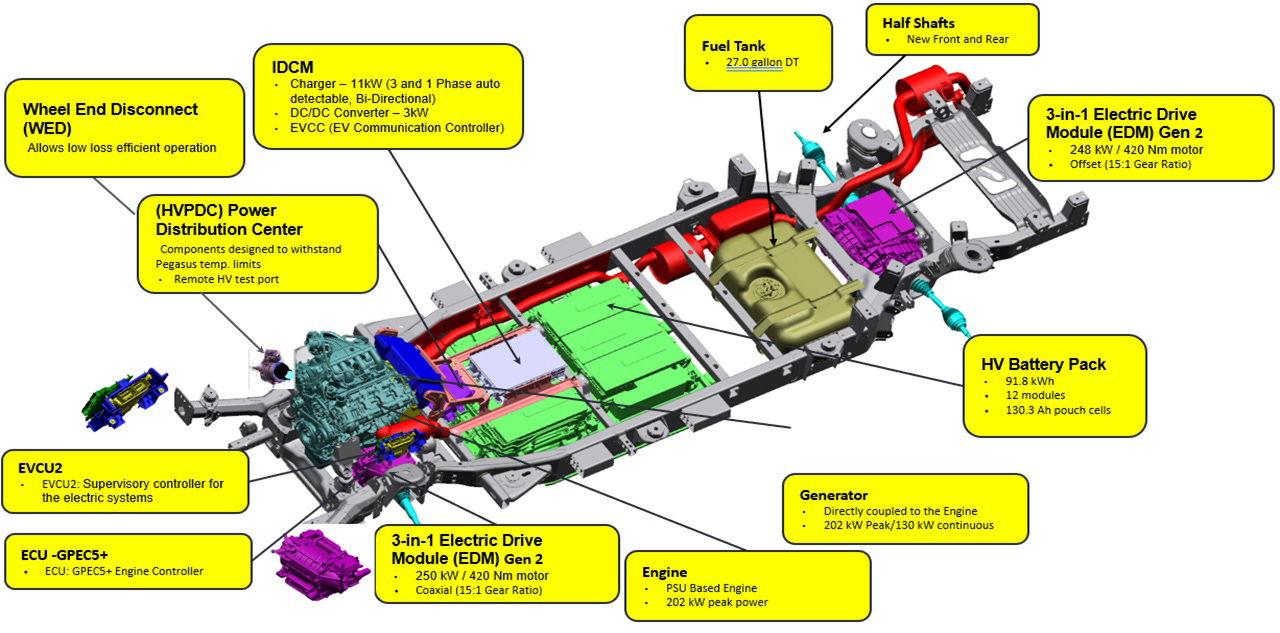
Here’s how the Ramcharger will be laid out.
What’s An EREV?
You’ll also see them referred to as Range-Extended Vehicles (REX), Range-Extender Electric Vehicle (REEV), and probably some other terms I’m choosing to ignore. Regardless, we’re talking about cars and trucks that are driven by electric motors, but equipped with fuel-powered generators.
Compared to Plug-In Hybrid Vehicles (PHEV) like the Jeep Wrangler 4xe, EREVs have no mechanical connection between the engine and wheels, so they’re driven by the electric motors only. The internal combustion engine (ICE) runs a generator, providing the ability to recharge the batteries as you drive.
The benefits in such a setup are that you get the extreme performance and fine control offered by electric motors, combined with the ability to operate in zero-emissions mode using battery power for shorter trips, as well as the essentially infinite range and quick fill-ups offered by traditional gasoline or diesel-powered engines.
EREVs are not new. Beginning way back in the halcyon days of 2013, BMW offered such a setup as an option on the i3. But that was essentially a scooter motor packed into an electric commuter car. No one’s made an EREV pickup truck yet, but that will change late next year, with the Scout Terra and Ram Ramcharger (yes, really) are slated to begin production.
More details on both vehicles are starting to trickle out, hence writing this article now.
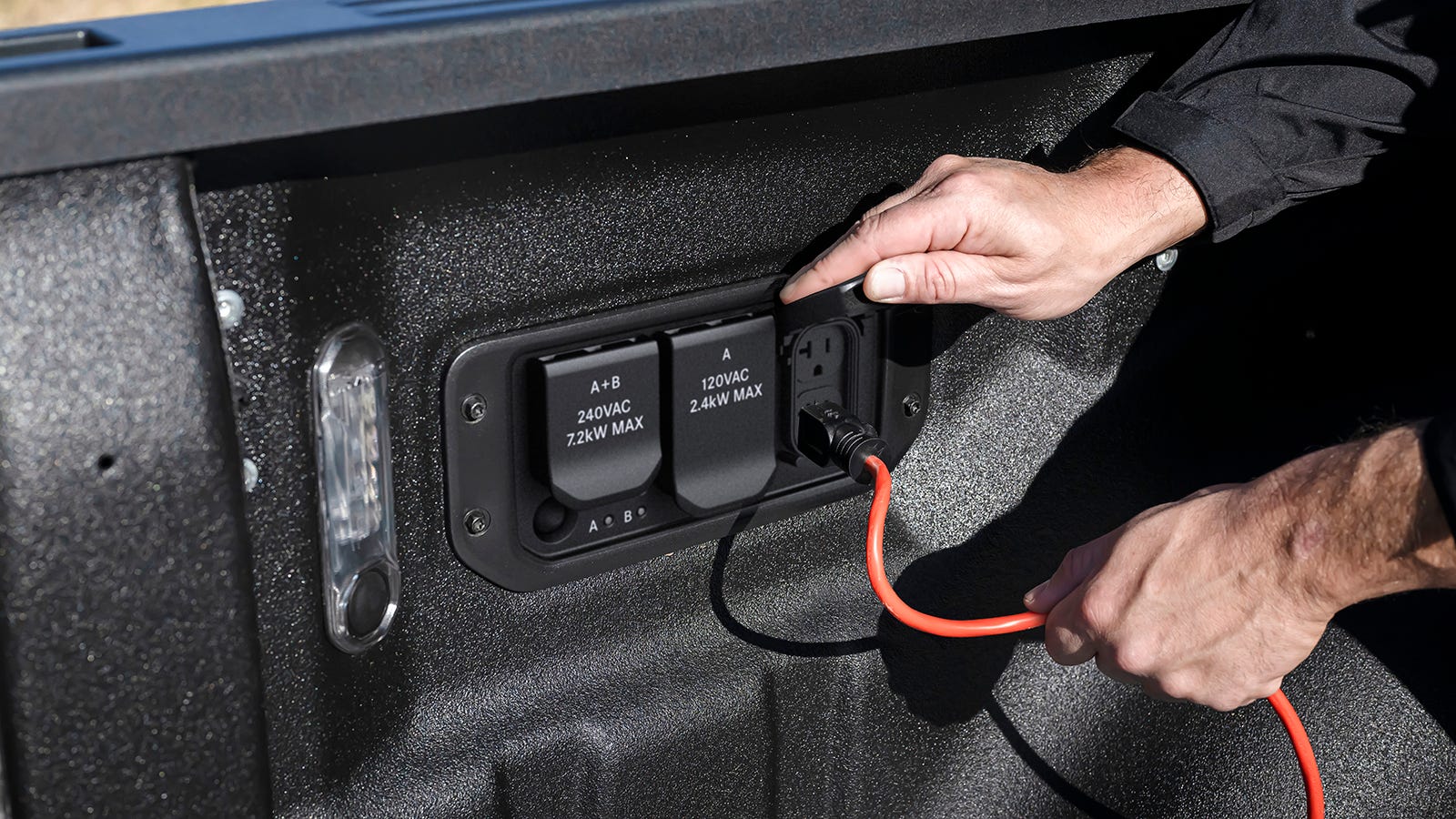
Bed outlets in the Ramcharger.
How Much Power We Talkin’?
I’ve explored the Ram Ramcharger in depth for Outside, and the Scout Terra for both Outside and this Substack, twice. Go read those pieces if you want to find out about stuff like horsepower, 0-60 times, and locking diffs. I’m going to keep this article narrowly focussed on the performance these vehicles offer preppers, because it’s nice out and I’ve got some new rifles I want to sight-in on BLM land this afternoon.
For the Ram Ramcharger, we’re looking at a 91.8 kiloWatt-hour battery and a 3.6-liter V6 running a 130 kiloWatt generator. The 27-gallon gas tank contains another 910 kWh of energy. Takeoff is via a 7.2 kW power panel with two 120 volt and one 240 volt outlets.
Scout is calling the EREV versions of the Terra pickup and Traveler SUV “Harvester.” Those versions of those two trucks will have a battery capacity of around 60 to 70 kWh. Scout hasn’t yet released many details about the takeoff, but pictures show at least one 240 volt outlet. Nor do we know the fuel tank capacity, engine size, or generator output.
How do these differ from the 7.2 kW power takeoff on existing hybrid or pure-ICE pickups like the Ford F-150 Powerboost? Battery capacity. That vehicle offers 1.5 kWh of usable capacity before the engine kicks in.
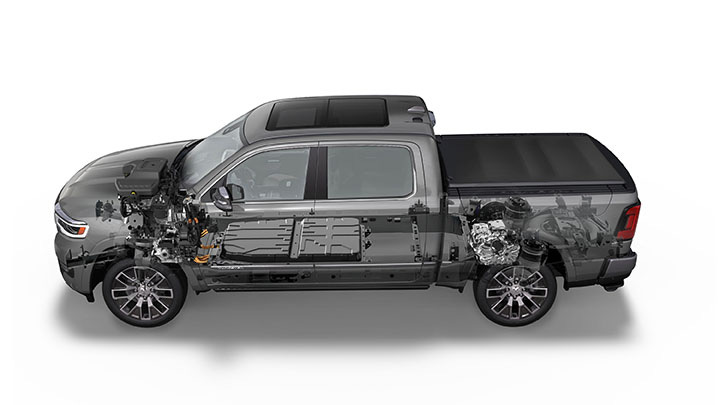
The Ramcharger will look just like a regular Ram, but it’s a lot different under that skin.
How Is This New?
“But Wes, I can just run the diesel SuperDuty you made me buy, and plug my chop saw into the bed outlet on that,” I hear you complaining in my mind’s eye. Another one of my imaginary friends raises their hand and says, “Why not just bring along my Honda generator?”
Speaking to MotorTrend’s Frank Markus, Ram claims that a fully-charged and fueled Ramcharger can power the average American home (which consumes 30 kW/day) for 11 days. And it can do that together with the ability to tow a 14,000 pound trailer, and haul 2,625 pounds of payload. Complete with 33-inch tires, ride height-adjustable air suspension, and four-wheel drive with a locking rear diff, that same vehicle can tackle most off-road trails, and inclement weather.
The 34-gallon tank on a diesel Super Duty holds 1,261.4 kWh of energy. The battery and fuel tank on the Ramcharger together carry 1,001.8 kWh. Significantly less, but with the additional versatility of being able to switch between battery and gas power.
Details are still few, but it appears as if both the Ramcharger and Scout will allow users some control over which energy source is employed at a given time, in addition to drive modes setup to prioritize battery charge states, silent operation, and other stuff not relevant to this discussion.
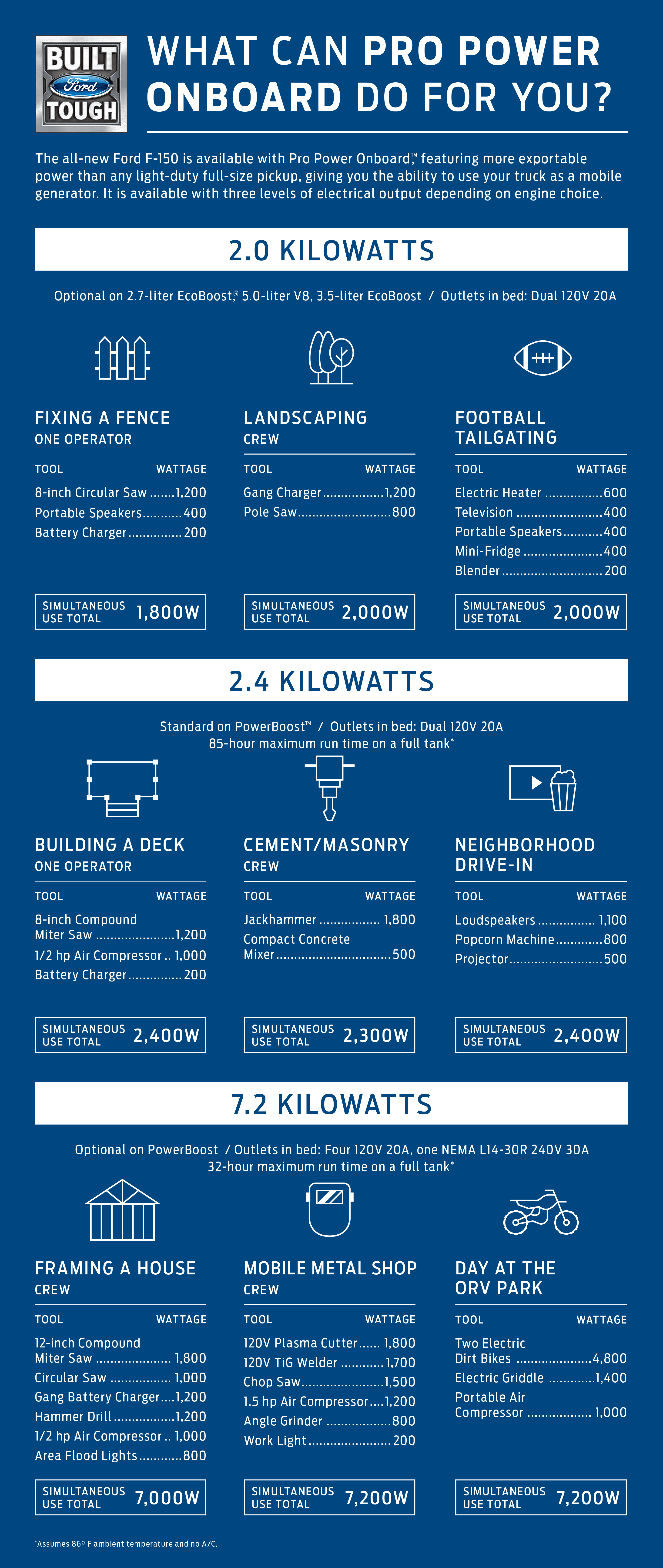
Ford created this graphic to demonstrate stuff you can power with its F-150 Powerboost. This is with only a 1.5 kWh battery, but 1,065 kWh of gasoline.
How Can We Use That Power?
All the above means you’ll have an unprecedented ability to run high-draw appliances on battery power-only over long periods. You’ll be able to run every system in a large camper—including an induction stove and big A/C unit—on vehicle battery alone, for multiple days for instance. Or charge e-bikes while you sleep. Or keep your house or cabin powered during a blackout, again for multiple days, all without even running the gas generator.
Think of the new possibilities this will create. Small, efficient A/C units and electric space heaters may become commonplace and practical for use in a rooftop tent or ultralight wedge camper. Operating an electric motorcycle, e-bike, or electric ATV from an otherwise austere camp will become much easier. Recharging a disabled all-electric vehicle in an area otherwise without power will be more practical than trying to tow-charge one.
Or scale this into disaster preparedness and response. You’ll be able to select whichever power source is readily available in a given circumstance, then use that to power appliances, tools, a camp, or even other vehicles.
And unlike a standalone generator, all that capability will be riding around with you, ready to go, in practical trucks that can go pretty much anywhere. And you’ll have that capability without eating up bed space, taking a big chunk out of your payload, or requiring you to carry around leaky fuel canisters.
Those same trucks can operate silently in battery-only modes, and can charge their large battery packs quickly, without hooking up to an external power source. Factors like minimum charge levels and ancillary power draw will come into play here, but the Ram Ramcharger’s 130 kW generator should be able to fully charge that 91.8 kWh battery in under an hour. Run out of fuel? Grab a jerry can.
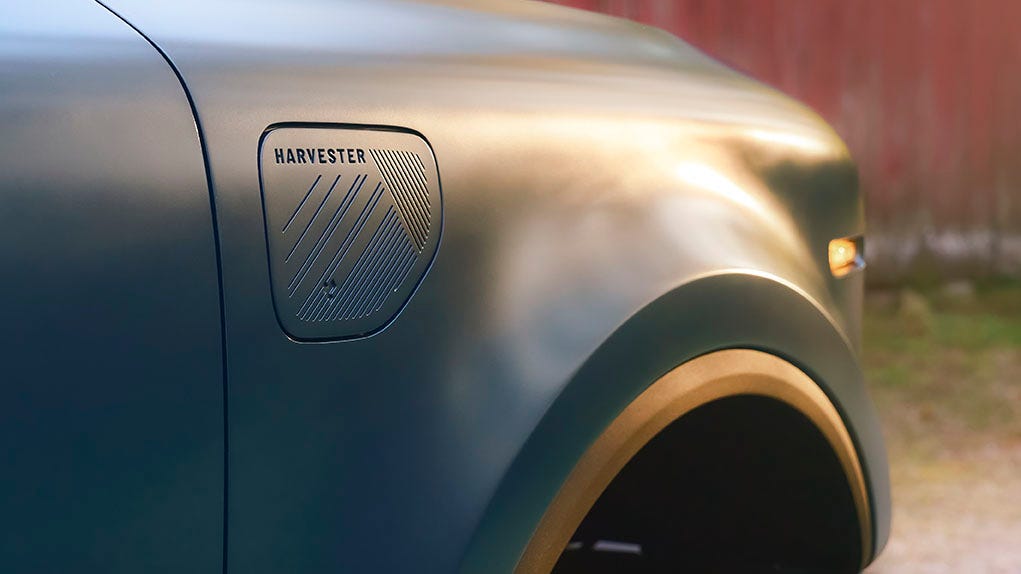
Harvester-equipped Scouts will get a front fuel tank and rear engine, maintaining the frunk.
All of that sounds immensely practical in real world use cases. Right now, no EV has the necessary range to reach my family’s cabin in northern Montana with enough capacity onboard that we could actually leave should the power go out, which it frequently does. By setting up that cabin’s fuse box to accept input from the truck, we’ll no longer be impacted by those blackouts. I’ll be able to show up with a fully charged battery by switching over to generator power-only after the last fuel stop. And that same vehicle will provide efficient, zero-emissions transportation for local driving around our home in Bozeman, and silent operation while hunting.
We’re all getting a future full of more frequent, more extreme weather. One with greatly reduced political stability that may render external aid during those now more likely disasters obsolete. Both the Ram Ramcharger and Scout Terra Harvester will give prepared individuals the ability to remain self-sustained for longer, and enable communities equipped with these trucks to better care for their members. And while that’s not exactly the future any of us want, it is the future we’re getting. It’s reassuring to know we’ll have the vehicles to match the challenge.
Wes Siler is your guide to leading a more exciting life outdoors. Upgrading to a paid subscription supports independent journalism and gives you personal access to his expertise and network, which he’ll use to help you plan trips, purchase gear, and solve problems. You can read more about what he’s doing on Substack through this link.
As long as it’s not a Tesla, I’ll buy it!
So they may be tainted, but t'aint enough!