The Population Most Threatened By The Second Trump Administration? It Could Be Birds.
A collection of policies that may be adopted by the White House next year will imperil bird populations across the continent
In addition to serving as a hub for community around my work, and providing useful service for my readers, the thing I really want to achieve with this Substack newsletter/blog thingy is the ability to tell stories I think are important, free from overly cautious editors and pernicious advertisers. Here’s a story I pitched to Outside, the Washington Post, and Outdoor Life with no luck. As you’ll see, it might be an important one.
The reason they all said no was that I pieced all this together in late July, at the tail end of the craze around reporting on all the batshit insanity in Project 2025. By that time, Trump was distancing himself from that, people were believing him due to some sort of space-time distortion bubble within their memories, readers had fatigue from reading about stuff like the plan to privatize weather, and traffic was starting to fall off.
But fast forward to now, and all of a sudden the incoming administration appears to be adopting many of the proposals and personalities from Project 2025 for its transition. Which means the stuff I’m about to explain has a chance of coming true. And it will effect all of us if it does.
Spread across various sections of Project 2025 are three separate policy proposals that target bird conservation. I don’t think there’s any conscious attempt to do this, but put together, they couldn’t represent a more targeted attack against wild birds if they’d tried.
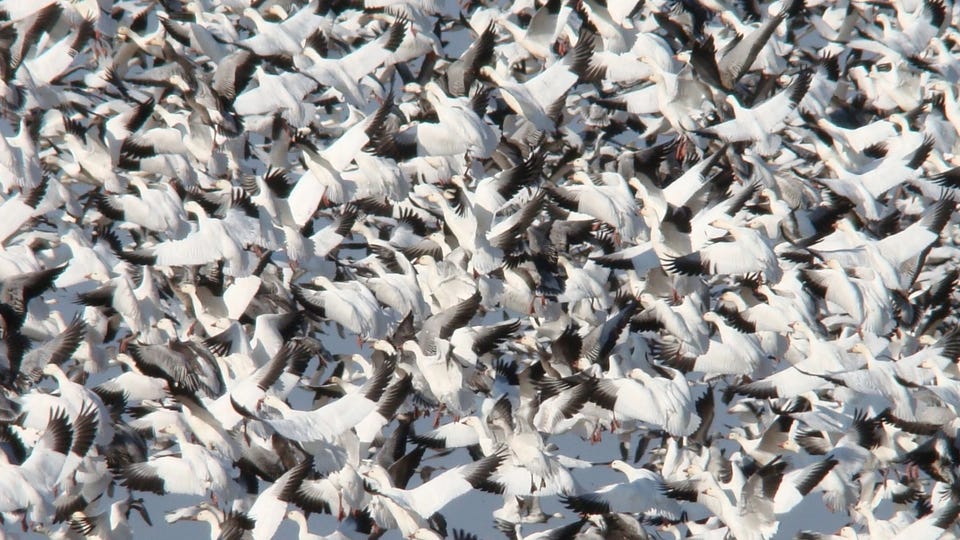
As you read this, I want you to keep in mind that wild bird populations in America, as they exist today, are the product of deliberate restoration efforts. Despite the fact that we’ve lost at least three billion birds over the last half century, things could have been much worse. In the early 1930s, waterfowl populations had fallen as low as 27 million birds. Today that number is over 50 million. And that recovery has taken place even while the number of humans in this country has trebled and as we’ve lost 54 percent of all wetland acreage in this country. 96 percent of bird species rely on wetlands for their survival. Those conservation efforts have been led by bird hunters, who are trying to continue and expand the work. But the next Trump administration could erase a century of progress.
The Proposal: Eliminate The Conservation Reserve Program
Writing his chapter of Project 2025 about the Department of Agriculture, deregulatory activist Daren Bakst calls for, “the elimination of the Conservation Reserve Program.”
Bakst goes on to say, on page 304, “The USDA should work with Congress to eliminate this overbroad program.”
The Consequence: Kiss The Wild Pheasant Goodbye
I asked Minnesota Governor Tim Walz about Bakst’s proposal while we were hunting back in October. His response was that, “Pheasants will be gone,” if CRP is eliminated.
The Conservation Reserve Program was created by the Regan administration as part of its response to the farm crisis. It pays farmers across the agricultural heartland to leave marginal acres wild, for the express purpose of wildlife conservation. Back in 2021, I wrote a feature story explaining how it works in detail.
Wild pheasant populations are, in this age of industrial monoculture farming, so reliant on CRP funding that their population numbers track virtually one-to-one with changes in that program’s budget. And while pheasants are obviously a non-native bird, combined efforts from the federal government and nonprofits like Pheasants Forever to create good pheasant habitat also benefit native wildlife from top to bottom. That means everything from deer, to small predators like skunks and foxes, to birds of prey, songbirds and even insects. As pheasants succeed, so does general biodiversity across the Midwest.
The CRP protects about 20 million total acres nationwide.
The Proposal: Invalidate The Migratory Bird Treaty Act
Writing in his chapter on the Department of the Interior, William Perry Pendley (an all round fun guy!) calls for a return to policy changes enacted by then-Secretary of the Interior David Bernhardt (also a neat dude!) that allowed big oil and gas operations to kill migratory birds without penalty.
The Consequence: Several Duck Species May Go Extinct, More Will be Imperiled
To recap one of the most popular articles I’ve ever written, waterfowl are perhaps the biggest success story for the conservation movement. And the Migratory Bird Treat Act, which protects waterfowl as they migrate from Canada, through the U.S., to Mexico, is the crowning achievement of that movement.
The rule change would stop requiring energy companies to follow common sense practices like covering oil pits to prevent flocks of birds from landing in them, or spacing power transmission lines far enough apart that a raptor’s wings can’t contact two of them at once. Those rules aren’t terribly costly, but impact infrastructure projects across the country, so in aggregate can either protect or kill vast numbers of birds.
MBTA rules are why British Petroleum was fined $100 million for killing a million or so migratory birds during the Deepwater Horizon disaster. Such penalties strongly incentivize private industry to protect birds migrating through their operations.
Aside from directly killing millions of birds and driving multiple species towards extinction, violating MBTA’s rules will invalidate the agreement, imperiling the future of waterfowl conservation across the continent.
The Audubon Society has written about this issue a bunch, here’s a good place to start.
The Proposal: Eliminate The Natural Resources Conservation Service Wetlands Program
Just after arguing for the elimination of the CRP, Bankst calls for federal management of the NRCS Wetlands program to end.
The Consequence: 94 Percent Of American Wetlands Are Threatened
Called the Soil Conservation Service until the Clinton administration, the NRCS helps administer federal habitat conservation programs on private land, protecting over 5 million acres of wetland.
As a part of the Agricultural Conservation Easement Program, NRCS provides funding and technical assistance to enable farms and ranches to maintain wetlands on private property for their environmental benefits. Bakst proposes eliminating federal funding for this program, and eliminating federal administration of it.
This is a problem that will extend beyond birds. Aside from habitat benefits, the NRCS wetlands program aims to prevent catastrophic flooding by rehabilitating wetlands in flood prone areas, protecting vulnerable farms, towns, and infrastructure. As climate change continues to make flooding a more common phenomenon, any loss of wetlands—which act to absorb excess flow from streams and rivers—makes that flooding worse and more expensive.
The USDA says this program protects, “Prairie Potholes, Peat Bogs, Fens, Playas, Mountain Meadows, and Riverine wetlands.” Those serve as important habitats for non-migratory wildlife, as well as acting as stopping off points for migratory birds as the move north and south each winter and spring. Again, 96 percent of all bird species rely on wetlands.
How Many Birds Will Trump Kill?
To most Americans, these are probably some pretty obscure programs, but their impacts are incredibly far reaching. And the thing is, they’re far from the only important conservation policies, programs, and budgets that are threatened by the proposals in Project 2025.
Also in there are plans to gut the Endangered Species Act, eliminating protections for wolves and grizzlies, and drastically reducing the amount of habitat that may be set aside to protect an endangered or threatened species; the elimination of mandated local input in environmentally-impactful legislation in favor of for-profit mandates in state constitutions; the elimination of all federal research into climate change; expanded mining and energy extraction operations, even in sensitive areas; prioritizing access to dwindling western water supplies for agriculture and industry, not wildlife; repealing the Antiquities Act and eliminate National Monuments; and much more.
All that will combine with newly emboldened and empowered far right movements and state and local governments. Utah’s big budget lawsuit attempting to privatize all 18.5 million acres of BLM land within its borders is one great example of something that seemed implausible until November 7th. Expect more evildoing along those lines.
So while no, I can’t tell you how many bird will be lost to these policies. Their ultimate impact will depend greatly on implementation, and how long any of the above stick around until some hypothetical future repeal. If we ever get a chance to choose our own leaders again, we may be able to reverse some of this stuff before birds disappear altogether. Until such a time, expect consequences that are both large, and unpredictable. Dramatic population collapses can occur quickly when habitat loss, unpredictable and extreme weather, disease and pollution all combine to cause a tipping point.
But don’t listen to me. Here’s a quote from a letter 17 former federal wildlife officials wrote to then Secretary of the Interior Ryan Zinke in 2018, objecting to what where then his plans to violate the MBTA:
“Birds are, quite literally, the proverbial ‘canary in the coal mine.' How birds fare in the world indicates how all wildlife and habitat, and by extension human populations, will fare.”


“As pheasants succeed, so does general biodiversity across the Midwest.” A powerful point that warrants its own treatise.
I appreciate the directness and insinuations Wes!
Hear, Hear, Wes!
I too have been reading your work for a number of years, and appreciate your postings here on
substack.
I seem to recall your writing that "Hunters and Outdoorsmen have always been Conservationists."
My apologies if that is not correctly quoted, but I have always admired your respect for our wide open spaces, and encouraging the rest of us to do the same.
Thank You, and keep up the Great Work!