
The Most Effective Supplement I’ve Given My Aging Dog? Psyllium Husk
Fiber supports digestion, manages both diarrhea and constipation, and it’s insanely cheap

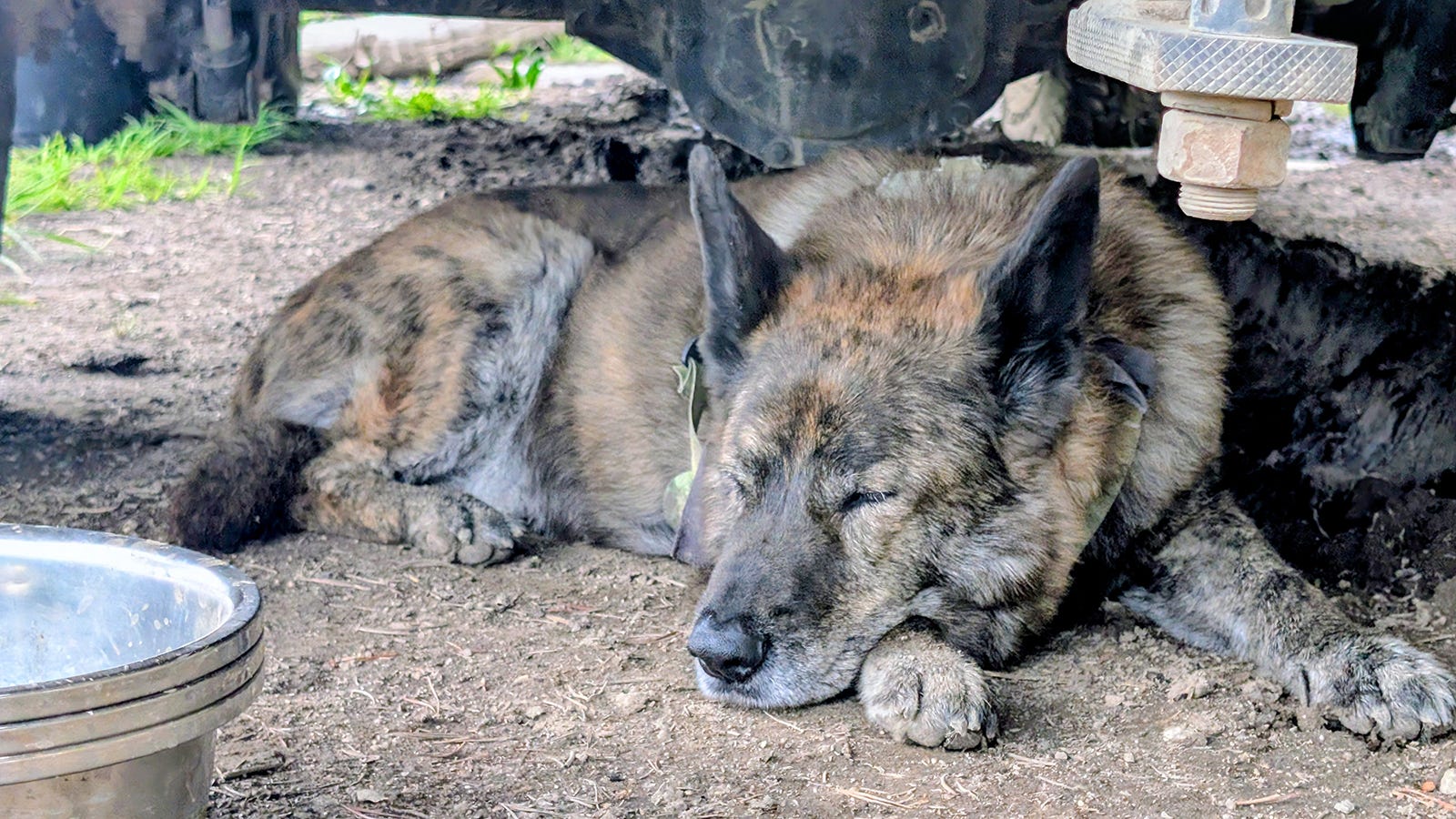
Wiley will turn 14 sometime around Christmas or New Year’s. And while he’s starting to slow down a little bit with some weakness in his back legs and a slight heart murmur, he’s otherwise the same, healthy, active dog he’s been since the friends who rescued his entire litter with their mom gave him to me when he was 8 weeks old. One of the worst problem’s he’s had was some sort of GI infection last winter, that resulted in bloody, smelly, greasy diarrhea. On my vet’s recommendation, I solved that problem with psyllium husk.
Wiley’s always had a sensitive tummy. Whether that’s due to a tiny amount of wolf content, or just the vagaries of dogness, I’ll never know. He never much liked kibble, and suffered from itchy skin and rashes when I fed him that as a puppy, which led me to begin the journey that eventually resulted in the healthy, affordable raw diet Virginia and I now feed all three of our dogs.
And while that cured the skin irritation and gave me a dog that’s never needed any vet care beyond shots and checkups, he still always had occasional loose stools. No big deal, but also less than ideal for ease of clean up. And sometimes those would fail to fully express his anal glands, which would cause some very stinky farts.
That problem came to a head in January, when those stools got looser and looser, eventually becoming bloody, smelly and just disgusting, even in the context of dog poop. Fearing bowel cancer, I was dreading the vet visit, but an X-ray and a stool analysis showed a simple infection. They gave him a course of antibiotics, and told me to feed him plain psyllium husk. The vet said to start with a tablespoon and just keep going meal-by-meal until problem resolved and the poops were again firm.
I never stopped the psyllium husk.
What I do now is just dump what’s probably a couple tablespoons of it on top of Wiley’s raw chicken drumsticks and other normal ingredients, and then douse the whole thing with what’s probably a cup or so of tap water, then give all that to him immediately. I feed the dogs once a day, so that’s it.
Now, Wiley’s poops are one big, firm, quickly-delivered log that’s not sticky, not smelly, and don’t leave behind any residue on our astroturf back yard. His farts haven’t smelled like rotten fish since.
I might be imagining it, but he seems to have more energy too. Which is not bad for a dog that has already outlived, or remained much more active than most of his contemporaries.
It’s really important to note here that you should only feed dogs plain psyllium husk, with no additives. Some brands add the artificial sweetener xylitol, which is lethal to dogs, so be sure to read the label extra carefully.
Here’s an affiliate link to a safe option on Amazon that only costs .74 cents per-ounce.
Psyllium husk is just the ground up seed wrapper of the Plantago ovata plant. Add water and it turns into a thick gel. This works as a prebiotic, adds bulk inside the stomach to promote satiety, and both softens constipation and firms up diarrhea, making it easier for the dog (or you!) to go poop under any circumstances.
It can in rare circumstances lead to intestinal blockages if it’s not given with adequate water. But adding some water to Wiley’s meals and making sure the dog’s always have access to a full bowl of cool water has prevented any issues for us.
A journalist with more than two decades of experience working around the world, Wes Siler is here to cut through the outrage and disinformation to bring you the factual, insightful, actionable reporting you need to understand what’s going on. Upgrading to a paid subscription supports this reporting, and buys personal access to Wes, who will help you save money on gear, plan outdoor adventures, and prepare for real life, and who promises he’s less salty in real life than he sometimes comes across as on the Internet.