

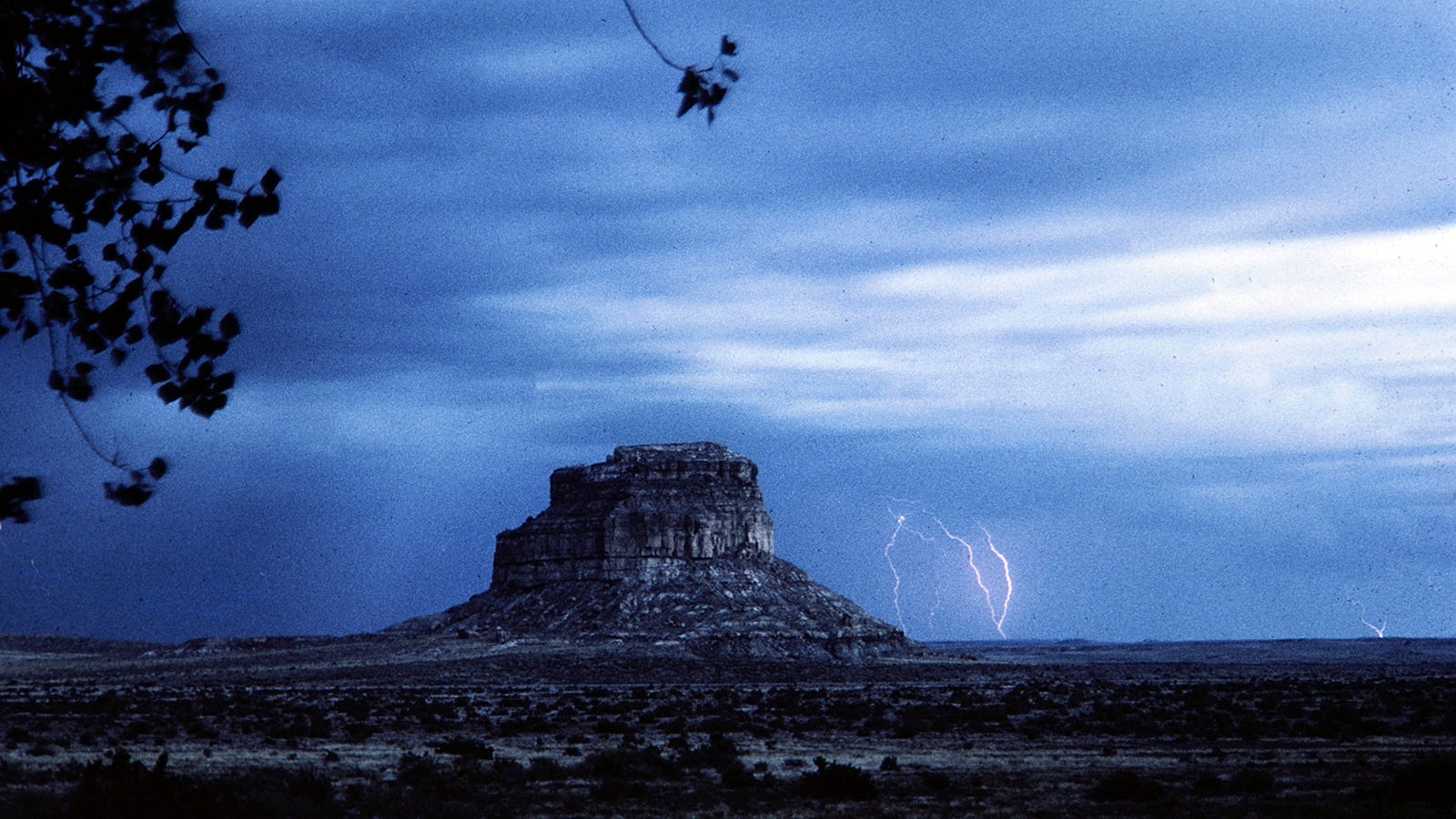
News from just this week: The Fish and Wildlife Service issued a memo saying it’s ok to kill endangered species, so long as you say you didn’t mean it. Mike Lee is trying to apply the Congressional Review Act to the old management plan for Bears Ears, potentially breaking permitting across all national monuments and teeing up a fail-by-design assault on the Antiquities Act. And, of course, the Roadless Rule is moving closer to its inevitable repeal. That’s all terrible and unprecedented, but in this destruction I see something else: an opportunity to completely rethink how we protect, manage, and regulate America’s nature.
I just gave a talk about exactly this to a group of state business leaders here in Montana. In this state alone, consumer spending on outdoor recreation totals $7.1 billion annually. Tourism employs one in 11 workers. Anglers spend $1.3 billion on tackle and trips. And one in five residents hunt. All of that is dependent on clean air, cold water, abundant wildlife, and pristine places. And yet few business owners are aware of the existential threat to their operations that’s quietly growing behind the scenes.
The reason I was invited to speak was to explain the Roadless Rule and the impacts rescinding it will have on Montana businesses. So I think everyone was surprised when I explained that will amount to virtually nothing.
I want to start this story with that because we need to talk about the disconnect between mainstream understanding of the Republican assault on America’s natural heritage, and the reality of how bad it could be, because it’s that which shapes the scale of the opportunity that I’ll get to a little later.
As I’ve explained at length multiple times, the reason Roadless is being rescinded is because Alaska Senator Lisa Murkowski is in the pocket of a timber company there that wants to use taxpayer subsidies to give old growth timber from America’s largest rainforest to China as cheaply as possible, and the Rule is standing in their way. Scrapping it was the concession she asked for in return for her vote on last year’s One Big Beautiful Bill Act.
Yes, rescinding it strikes some protections across 44.7 million acres of U.S. Forest Service land around the country. No, that doesn’t mean a bunch of acres are about to get bulldozed, despite all sorts of fundraising pleas from enviro non-profits, Substacks that use AI slop to just make stuff up in order to sell fear and lies, and influencers who garner millions of eyeballs despite applying zero critical thought or experience to the headlines they blindly read aloud on reels.
The reason why all that is a problem is that it distracts the public from policy changes that will actually cause real harm to the economy, and the places they care about.
The example I used in the talk was the unprecedented use of the Congressional Review Act to disapprove of management plans for areas managed by both the USFS and Bureau of Land Management. Led by Montana Senator Steve Daines, Republicans in Congress seem to think the CRA is a simple shortcut to rolling back extraction bans they don’t like without having to reach a 60-vote filibuster-proof majority in the Senate. In actual effect, the CRA is an incredibly powerful tool that does two things most people don’t expect: 1) it works retroactively to switch management plans from being routine agency process into being legally considered “rules” that must be approved by Congress. And 2) it prevents the implementation of any substantially similar rules in the future.
So, what Daines and his colleagues have done over the last year isn’t just a case of rolling back regulations on extraction projects they favor, what they’ve done is break the entire permitting process across USFS and BLM-managed lands. Every permit for any activity on those lands issued based on a management plan written since the CRA was passed in 1996 may now be legally invalid. The agencies themselves no longer have the power to write those plans or issue those permits, the vote shifted that authority to Congress itself. And Congress doesn’t have anything like the tens of thousand of staff, or generations of expertise necessary to conduct that planning or issue those permits. Doing that is the entire reason these agencies were created.
What’s a permitted activity on public land? Virtually everything beyond your personal recreation use. All oil drilling, all timber projects, all solar farms, all wildlife corridors, all guide services, and on and on could now be operating in a legal gray area.
That’s not just a problem in terms of economic output—BLM land alone generates $254.4 billion annually, supporting 884,000 jobs—but also for future development. Without a legal permit, projects requiring large capital expenditures will lose their access to financing. Insurance will no longer be able to underwrite operations that rely on permitting if those permits may be legally invalid. Even if the agencies look the other way while all this winds its way through federal courts over the next decade or so, operations for everything from oil fields to independent sightseeing guides will grind to a halt as they run up against an inability to borrow money, or purchase liability insurance. One of the largest economic engines in our country has been fundamentally broken by elected politicians who don’t seem to understand what they’ve done.
Case in point: Utah Senator Mike Lee just this week launched an effort to use the CRA to disapprove of the old management plan governing the former boundaries of Bears Ears National Monument, before its area was reduced 91 percent by Trump in July. He seems to think that’s a clever end-run around the potential for a future administration to simply re-establish the monument’s boundaries. But, if it passes, it could have a similar impact to the application of the CRA to other forms of land, making the legality of all management plans within all national monuments (written since 1996) legally dubious.
While this wouldn’t technically impact the Antiquities Act itself (the 1906 law that gives presidents the authority to protect areas of historic, scientific, or cultural significance), the dysfunction it would create could combine with the GOP’s other efforts to unravel Antiquities in a fail-by-design scenario that would give bad faith political actors like John Roberts the powerful argument they’ve explicitly said they’re looking for that national monuments shouldn’t exist.
One of the points I try to make about the Roadless Rule is that, despite the huge amount of forest it provides protections to, it’s only an agency rule, not an actual law passed by Congress and signed by a president And that makes it subject to the ever-changing whims of electoral politics. So long as it followed the necessary legal process, the Clinton administration was free to create it, just like the Trump administration is free to rescind it. Beyond holding an administration responsible at the polls, there’s really no mechanism for the American people to make their voices heard, and no protections in place to ensure a mere rule is capable of outlasting its creators.
And, if America’s little experiment with fascism is teaching us anything, it’s that we can’t rely on norms, precedent, good intentions or even simple honesty to protect the things we care about, we need to permanently enshrine those protections in law.
Believe it or not, but this is the point where I make all of this bipartisan. As we’re seeing with Daines, Murkowski, and Lee’s attempts to wreak havoc while avoiding the filibuster, when it comes to making laws, taking short cuts benefits no one. Well, except maybe our adversaries in China who can’t wait to get their hands on Alaska’s old growth timber.
But the very shortcuts taken by this Congress and administration are ultimately what is creating the opportunity that is the topic of this article. And it’s not just with the CRA. Through its attempts to subvert legal process established by the National Environmental Policy Act in order to shorten the permitting process—something we’re seeing with the abbreviated, now-45 day comment period on Roadless, and its transparently bullshit justification for the rescission being about wildfire—they’re building all of these policies on what is, at best, shaky legal ground.
They’re also doing us the significant favor of pointing out weaknesses in the foundational environmental protection laws we’ve spent the last generation taking for granted. The Endangered Species Act is the best example there. What’s going on there is FWS found an old dissent written by Antonin Scalia arguing that its use of the word “take” to discuss the death of an animal should be interpreted as implying a deliberate nature to the act. FWS now argues that, in the absence of that intent, a kill cannot be considered a “take.”
During recent Congresses and administrations, it’s been hard to impossible to find the political will to rewrite, or replace laws as important as the ESA. The big gift this Congress and administration are giving us is that they’re going to force us to.
The solution to now-broken public lands management frameworks isn’t for Congress to hire the staff necessary to administer those processes itself. It’s to write new laws that replace or restructure the Federal Land Policy Management Act and the Organic Administration Act. The solution to a subverted NEPA process isn’t to simply reimplement it, it’s to enshrine the requirement for public and stakeholder input into higher levels of legal protection. The solution to a interpretable words like “take” providing workarounds in the ESA and similar legislation like the Migratory Bird Treaty Act is to clarify and add specificity to their language. And the solution to protecting areas of national forest we don’t want to see logged is to declare them Wilderness.
It seems likely that Democrats will flip the House this November, replacing the leadership that’s been unwilling to do anything but rubber-stamp all this stuff. It seems possible that we’ll flip the Senate too, massively reducing the influence bad actors like Lee and Murkowski have, even if it remains extremely unlikely that Dems will achieve a filibuster-proof majority. But, strictly interpreted along the lines of conservation policy, that could be a good thing. Vital Republican constituents like major oil and gas firms and Chilean mining conglomerates are going to be as impacted by these mis-uses of the CRA and other laws as treehuggers like you and me are. And we can’t move forward with long-lasting legislation for public lands without their buy-in and input. Public lands are, after all, supposed to work for everyone, especially the economy.
And then there’s what can be achieved after January 20, 2029. All of this fear, all of these attempts to build walls or do land swaps in national parks, and all these very real, extremely perceptible impacts from climate change could—probably should—set up conditions where candidates for the next presidency make a new era in American conservation a key part of their platform, including their efforts to repair the economic damage that’s only going to get worse between now and then, and the inevitable attempt to swing us away from total reliance on energy sources that require war and destruction to sustain.
But we don’t have to rely on that happening. In breaking all this stuff that’s so important, Trump and his enablers are ultimately just creating conditions where we’ll have to create new laws and policies in order to fix what’s broken. The exciting thing here is that you and I will, for the first time in our lifetimes, get an opportunity to participate in establishing foundational conservation and environmental protection laws. It’s just up to each and every one of us to make sure we encourage that process to be as strong as possible.
How can you do that? I’ll tell you the same thing I told all those Montana business leaders who barely understood the Roadless Rule, let alone the impacts all the rest of this crap is going to have on their customers and companies: Become a more informed citizen.
Top photo: NPS
A journalist with more than two decades of experience working around the world, Wes Siler is here to cut through the outrage and disinformation to bring you the factual, insightful, actionable reporting you need to understand what’s going on. Upgrading to a paid subscription supports this reporting, and buys personal access to Wes, who will help you save money on gear, plan outdoor adventures, and prepare for real life, and who promises he’s less salty in real life than he sometimes comes across as on the Internet.
You know, I'm trying to be as positive as you are about all this. And I'm trying like hell stay as informed as possible so that when good changes are in sight again (e.g., better laws, better people) I will recognize those (and be more positive!). But I have to admit that it's all starting to feel a whole lot like the fast and furious destruction of USAID. I know this is totally different. But I also know how powerful money is and how quickly things can get out of control. I appreciate that you bring a different perspective along with crucial facts to these topics. Thank you, seriously.
“How can you do that? I’ll tell you the same thing I told all those Montana business leaders who barely understood the Roadless Rule, let alone the impacts all the rest of this crap is going to have on their customers and companies: Become a more informed citizen.”
Yes! I have never been so informed in my entire existence and intend to remain so. Why? To ultimately have the knowledge to FIGHT BACK when the time comes. I have to hope the time is coming and we VOTE to make this happen— sooner than later.
I like your attitude Wes and we need to maintain hope and work at having a plan for when we can affect change. Thanks for your work, it is appreciated.