
How To Buy A Flashlight
Taking advantage of the latest and greatest in an ever-evolving category is way easier than you might think

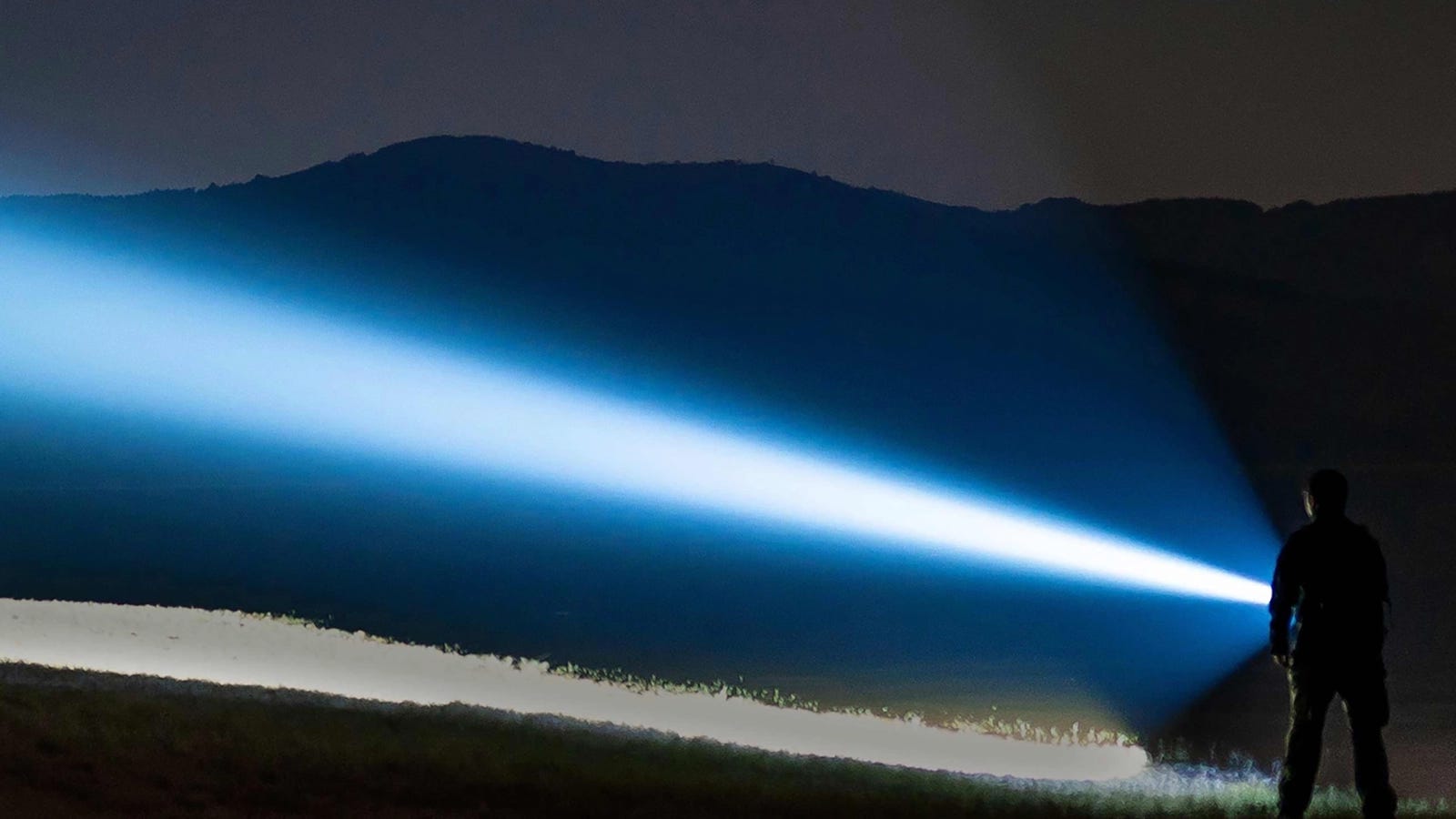
We’re entering the darkest time of year, so I figured it was a good a time as any to talk flashlights. Flashlights and headlamps are an essential tool outdoors, and also a category in which the pace of innovation is currently incredibly fast. That means a light you bought just a year or two ago may no longer offer competitive performance, and upgrading it might be cheaper than you realize.
When talking about flashlights, it can be difficult to communicate performance differences in a clear, approachable way. Cameras don’t capture light the same way human eyes do, especially at night. So beam shot photos and videos can often be misleading. I think the best way to capture performance differences is with numbers, and begin to talk about those numbers from a universally understand reference point.
Let’s use the classic two-D-cell battery Maglite as that reference, since most of will have owned or used one at some point. It produces 27 lumens, reaches 225 yards, features an 8 hour 30 minute run time, measures 10 inches long, and weighs 23 ounces with batteries installed. Beyond numbers, the quality and utility of a flashlight can also be measured in the shape and clarity of its beam. Again using that Maglite as an example, I’m sure we can all picture the scattered pattern of light it produces, which is full of rings, shadows and hotspots, even right in its center.
Since the first Maglite debuted in in 1979, the big innovation in performance has been with light emitting diodes. Most modern flashlights now use LEDs, which offer vastly higher performance in dramatically smaller packages.
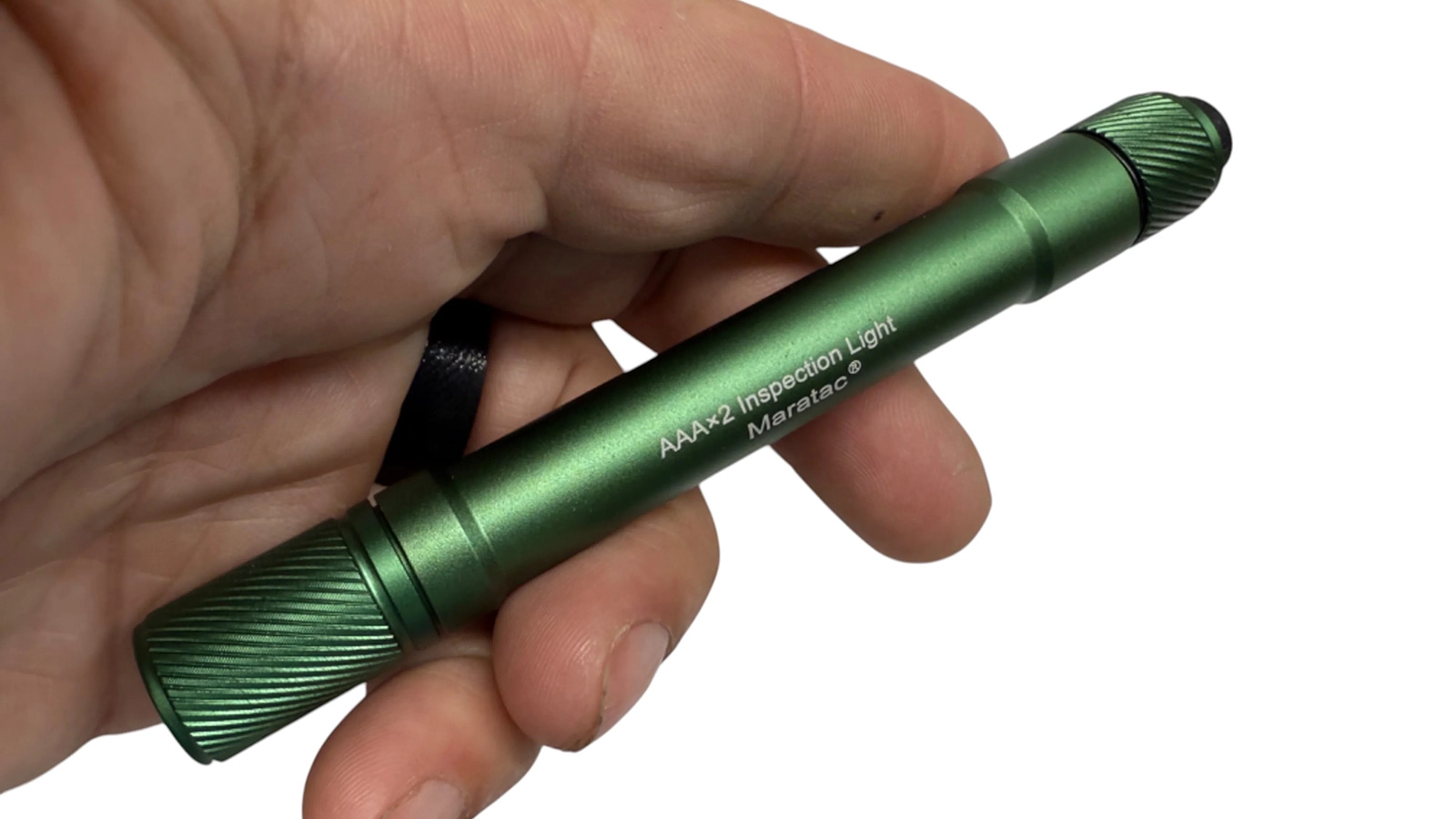
I carry an older version of this CountyComm Maratac 2xAAA light in the breast pocket of shirts and jackets. It makes 325 lumens on high, and runs up to 10 hours on the 50 lumen low. That makes it 12 times as powerful as a Maglite, and small tubular lights like these actually make better weapons, since they’re functionally a kubotan. The best part? It’s only $30.
Note that talk of battery types right up front. Batteries are the primary determining factor in the size, form factor, and performance of a light.
A single AAA light is small enough that it can be a (bulky) addition to your keychain. A 2xAAA is roughly the size of a writing pen, meaning it will fit in the same places one of those can.
An AA battery produces the same 1.5 volt performance as a AAA, but has a higher capacity. An AAA contains anywhere from 600 to 1,200 milliamp hours, where an AA holds 1,400 to 3,500 mAh.
Lights powered by normal AAA or AAs are usually similar in outright brightness, but the larger capacity AAs obviously offer longer run times at a given brightness level. That advantage may be offset by a AA lights thicker dimensions, which can make them too bulky to fit in a normal pocket a nice fitting pair of jeans.
On most normal flashlights, upgrading from an alkaline to lithium battery will increase energy capacity, offering you longer runtimes. Shelf life is another important consideration, as is cold weather performance. Stored in temperate conditions, lithiums offer 10-20 years of shelf life, versus the 5-10 years provided by alkalines. And lithiums also retain both performance and longevity into far colder temperatures than alkaline batteries do.
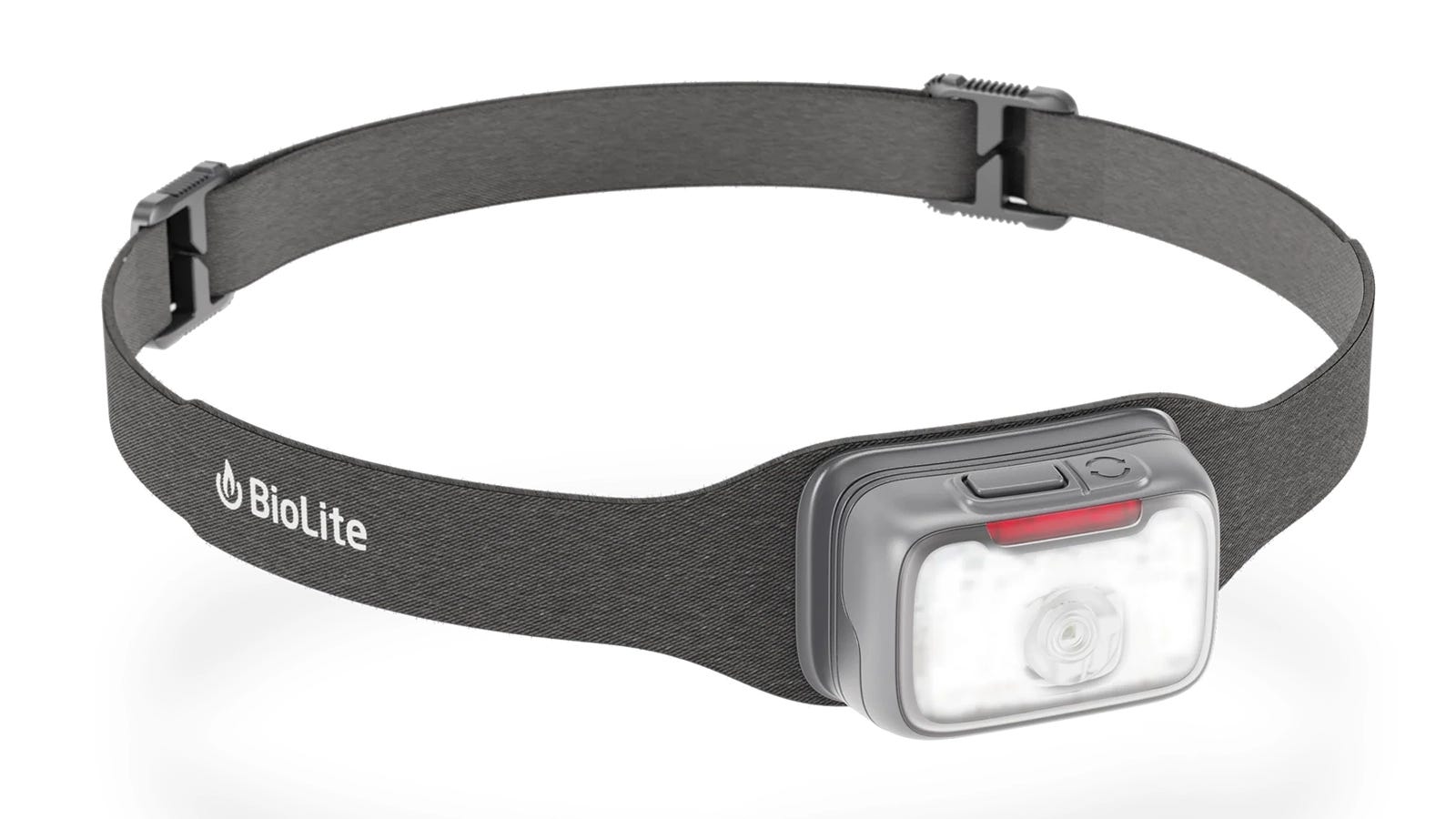
For at least the last five years, I’ve used nothing but Biolite headlamps. They’re just so light, so comfortable, and so bright that nothing else makes sense any more. This Biolite Range 500 ($52.46) is the latest and greatest, producing up to 500 lumens, reaching 100 yards, and lasting up to 200 hours on its 1.5 lumen low. That’s enough run time for 25 eight-hour long nights. You could probably complete an entire through hike like the Pacific Crest Trail without needing to charge this thing. The big innovation this year is the two-switch operation. The one on your left switches between modes(red, white flood, white spot, strobe), while the big button on the right is on/off. Just hold that to smoothly adjust brightness levels.
For emergency preparedness in a building or vehicle, choosing a light that can be powered by common AAA or AA batteries, and storing that along side a few extra lithium batteries is a great idea.
One important caveat everyone should be aware of is that some very high voltage batteries now come in sizes and shapes that look exactly like normal batteries. The 14500 rechargeable lithium battery, for instance, can produce up to 4.2 volts. Put one or two of those in a light designed for AAs and you can literally blow up your flashlight. A mistake that can and has killed people.
Another battery type that has become very common in recent years is the CR123A. One of those is shorter and fatter than a AA, and typically operates at 3 volts with 1,500 to 1,700 mAh of capacity. That can result in very short lights that operate at extreme brightness levels with solid run times. But, some may find them too thick to comfortably fit on a keychain or in a pocket despite their short length, and CR123A batteries still aren’t quite as common as AAA or AAs, which remains an important consideration if you ever want to grab batteries at a rural gas station or similar.
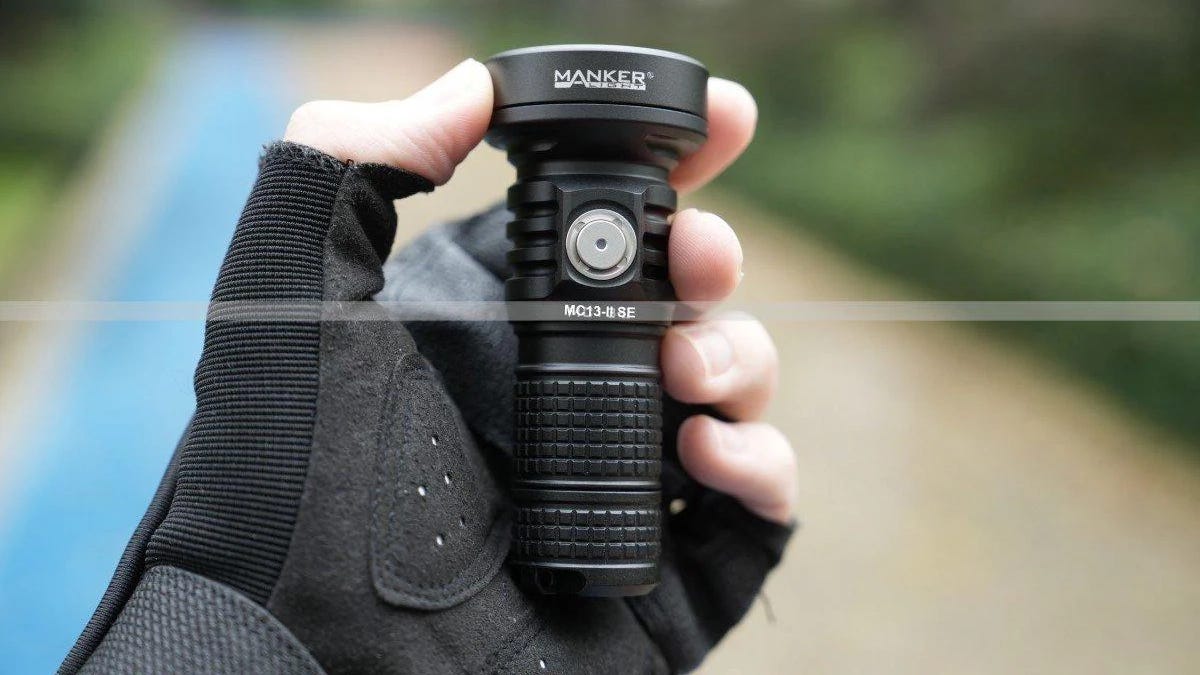
Spotlights aren’t practical until you need one, which means ones that come in tiny form factors that allow them to disappear into a backpack or coat pocket are the only ones worth carrying. I’ve been using this new Manker MC13 II SE ($85) since August. It throws 4,000 lumens 650 yards using the included 18350 battery, in a very tight beam, so is just what you need to search long distances after dark.
I should add a similar caveat here about high voltage rechargeable. A RCR123A is the exact same size and shape, but can operate at up to 4.2 volts. More flashlights designed for 123s can safely operate using the higher voltage batteries, but it’s very much worth double checking that.
As we move into talk of exotic, high-power batteries and the safety considerations using them brings an obvious question arises: why not simply combine a light and battery into a single cohesive unit? Doing so allows for a more efficient use of volume, shapes beyond simple round tubes, and eliminates the potential for end users to kill themselves by using the wrong batteries.
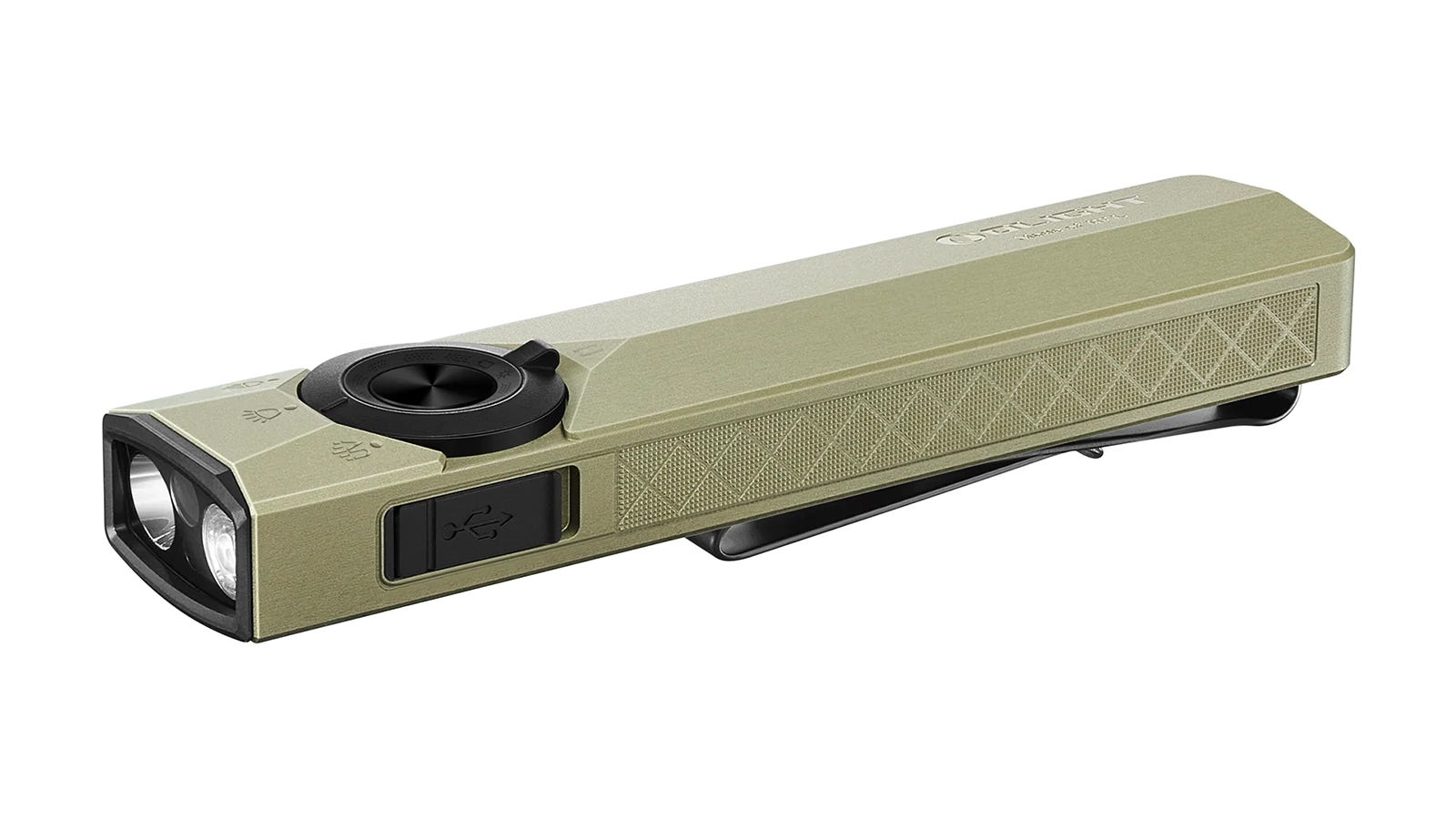
The new OLight ArkPro Ultra ($130) is my current favorite/go-to light. That flat form factor packs a ton of battery capacity (2,000mAh) into a light that you can comfortably carry in your back pocket, even while driving. And it switches between a 1,700 lumen flood and 800 lumen/225 yards spot light intuitively via the rotating switch. Unlike previous OLights you can charge it using a normal USB-C cord. I only wish you could get one without the UV light, for which I’ve found no actual use.
It’s likely no coincidence that OLight is the company making that solution popular. They’re the company that suffered a huge PR setback when a customer accidentally killed himself a few years ago by running a high power rechargeable battery in one of their lights that wasn’t designed for that. That’s a shame, not only because someone died, but also because it’s limited uptake for a brand that’s developed some really unique solutions at some really accessible price points.
Any conversation about rechargeable batteries must involve talk of battery chargers. And while storing one of those on your work bench at home may be convenient, carrying one with you is not. That’s another advantage of cohesive light-battery designs, you can just charge those by plugging them in. If you’re at home, just plug them into the wall. If you’re in your car, run them off the cigarette lighter or USB port. What about on human-powered adventures? The most efficient way to carry extra power is with a small, rechargeable battery pack. But you may not even need one. With run times that now extend into hundreds of hours for lights that easily fit into a pocket and weigh only a couple ounces, it can be hard to even conceive of trips that may necessitate a charge.
If I had to come up with a formula for determining the right light for your needs it’d involve comparing brightness and run times versus cost in your preferred size and method of carry. But honestly, modern lights are so bright, efficient, and affordable that it’s hard to go wrong.
Top image: OLight
Want to save money on outdoors gear, while buying the most effective stuff? Upgrading to a paid subscription is an investment in the future of independent journalism around the outdoors, and buys personal access to Wes, who will guide your individual purchases for apparel, tools, vehicles, and more. You can read more about that value proposition at this link.
This was great info and I am buying a few new ones!
The UV is great for charging up the lume on a an analog watch ahead of a prolonged time in the dark. So there is one - count 'em one - use! I think it's something that is a bit of a fad emerging from the Reddit flashlight crowd with few and far between professional applications.