
Extreme Cold Weather Layering For Women Who Want To Look Good
What to wear when it’s below zero, and photos are going to be taken

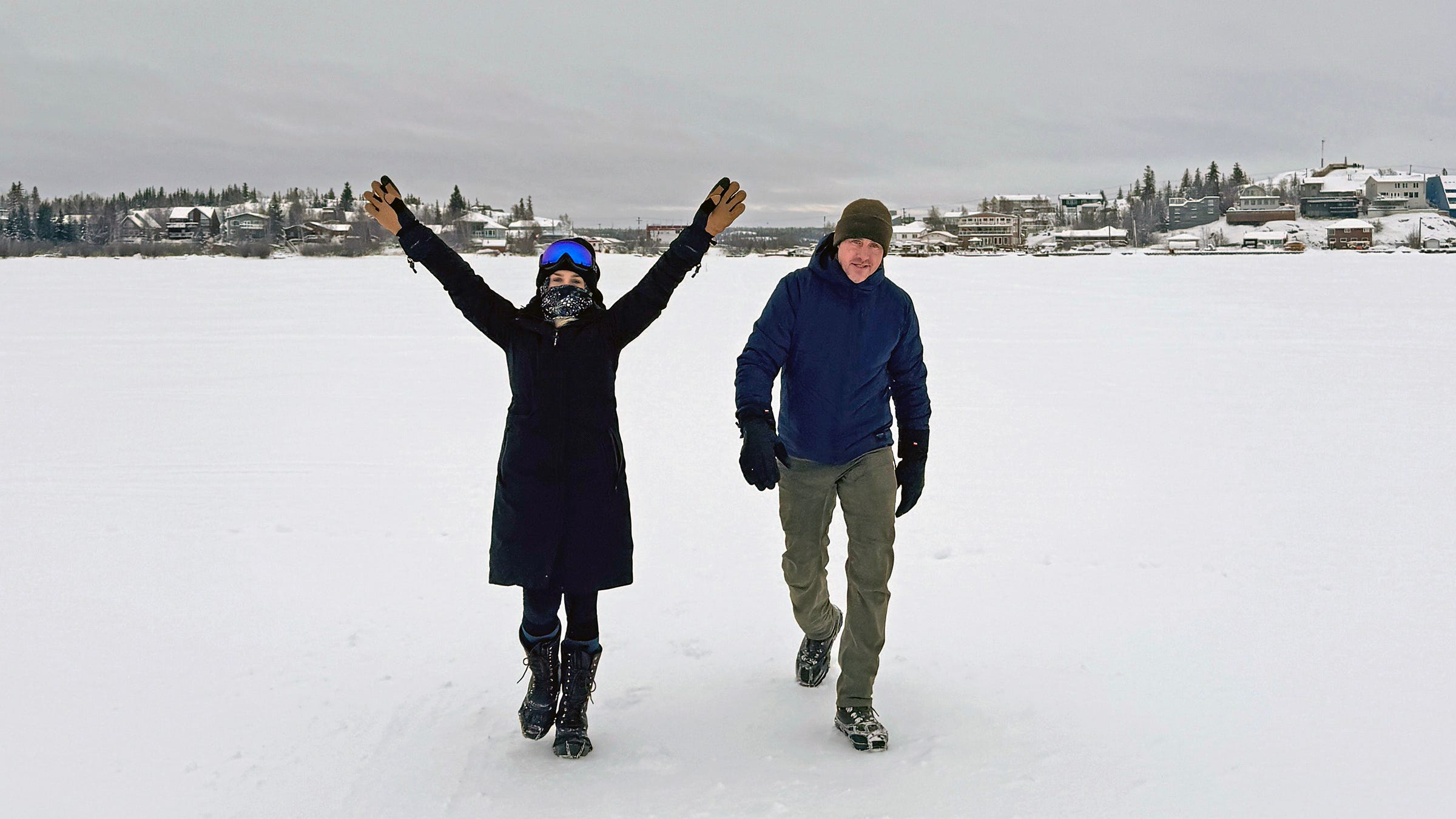
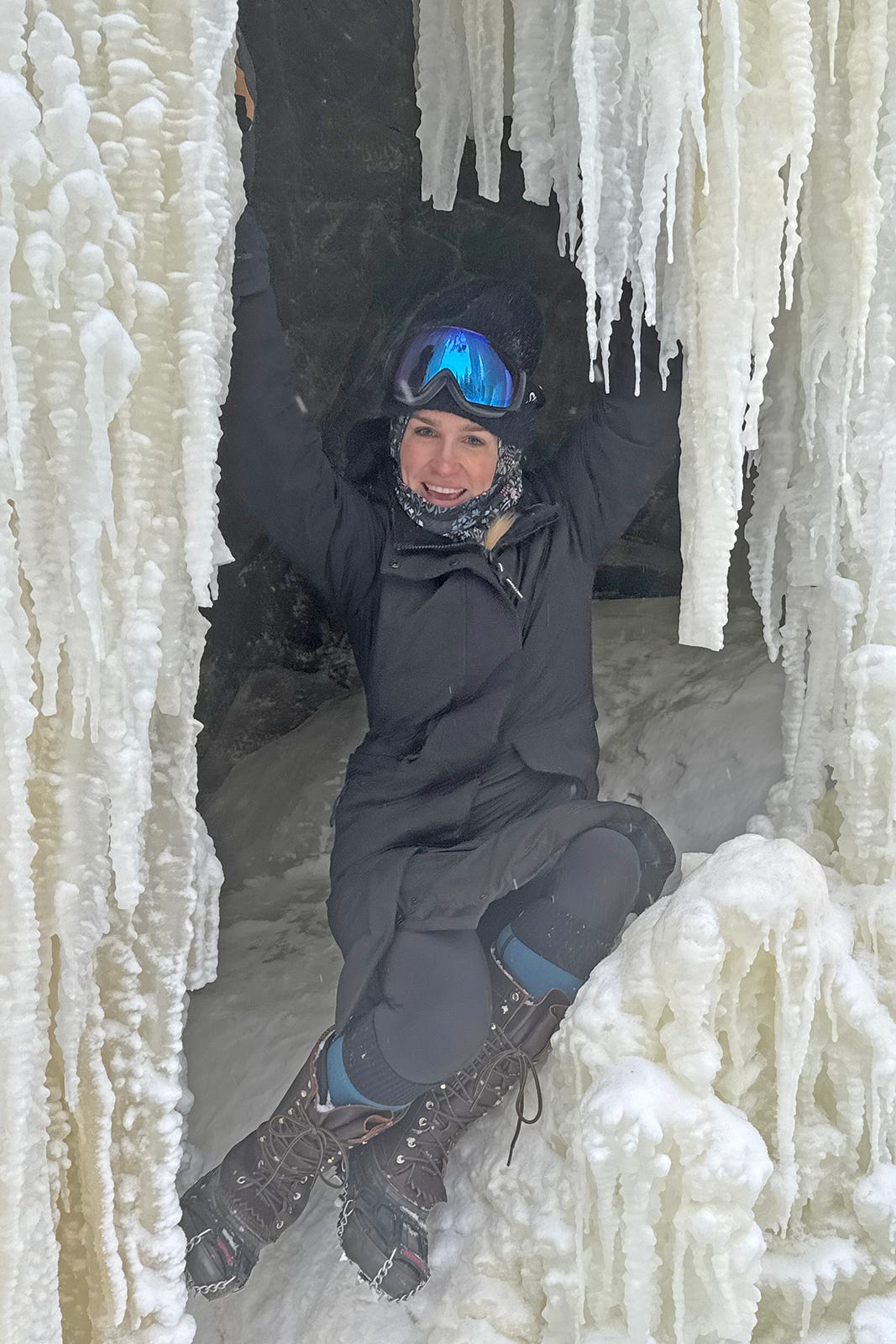
Yellowknife was rad, we saw the northern lights, and managed to stay warm the entire time. This was a unique clothing challenge not only because activity levels were pretty limited during the coldest temps—looking up at the sky for long periods in the middle of the night—but also because restaurants and other buildings were hot inside, requiring a system that could be donned and shed quickly and near completely. I wrote up how I approached that before the trip, but at the request of subscriber Deborah (and to celebrate the ratification of the ERA!), here’s what Virginia wore, and how it worked.
Guys, there will be takeaways for you here too.
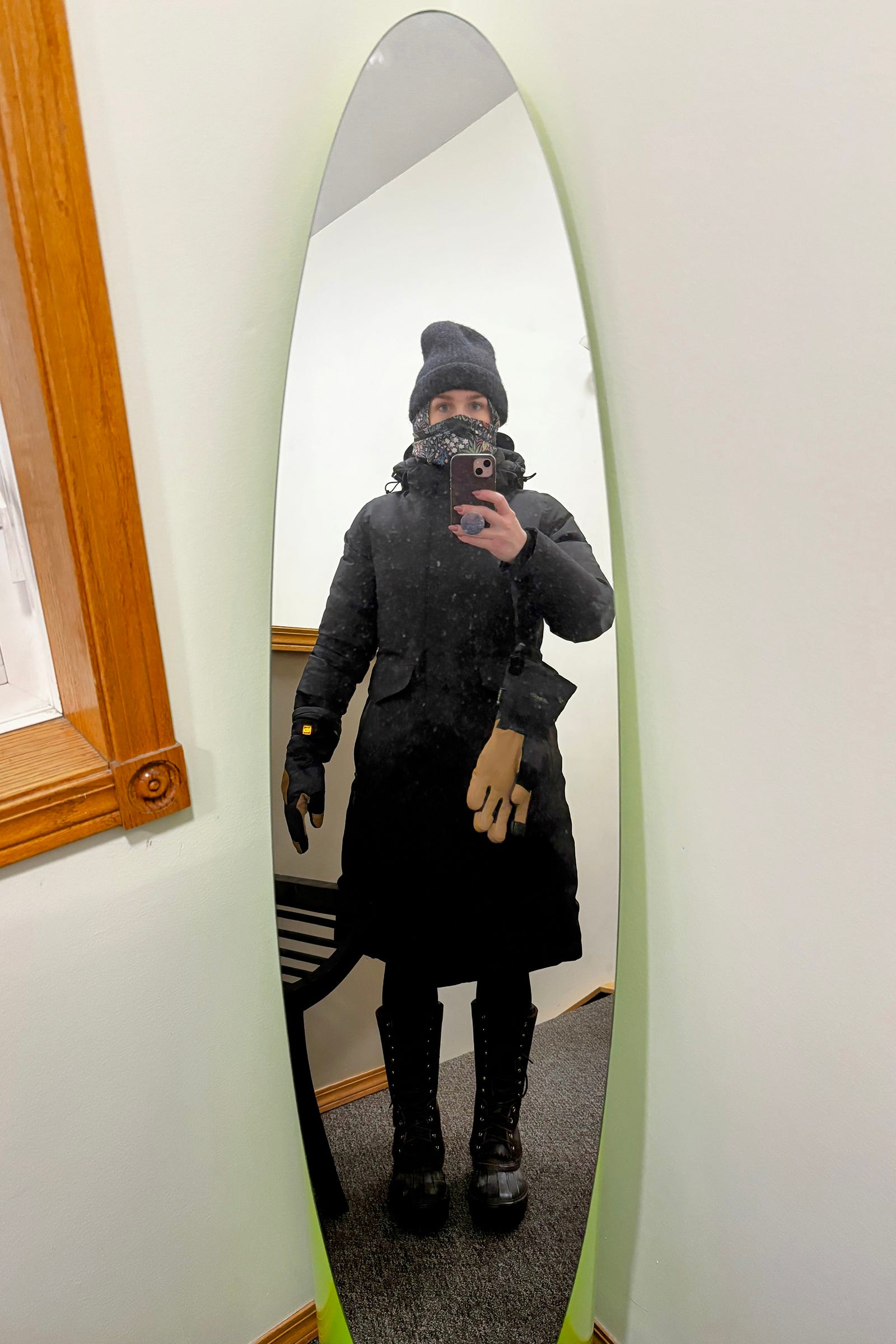
Parka: Triple Fat Goose Gravina ($600)
Let’s start with a couple big opinions. Big heavy parkas are very much not the right choice for most conditions. By combining loads of insulation with a heavy duty shell, they sacrifice packability, weight, and versatility all in the pursuit of a single performance metric—static warmth. Most of the time, you’re much better off just layering to suit the conditions. But, if it’s really cold outside and really warm inside, then that’s the one condition where these things actually do make sense, because they come off so easily, all at once.
I am also very much not a fan of Canada Goose. That brand’s quality and technologies are utterly commodity level—there is nothing but the logo that makes its stuff any different than, say, Columbia Sportswear. But, because that logo is fashionable, they’re able to charge out the wazoo for otherwise cheap-to-source crap that just isn’t worth any sort of premium.
This will be the subject of a longer rant at some point, but it’s possible to quantify the performance of technical apparel in ways that don’t involve brands or marketing or carefully retouched photo shoots.
Canada Goose’s flagship Expedition Parka ($1,950) is made using 600-fill down (they don’t specify the origin or species) that has a very…basic 80:20 cluster-to-feather ratio. It’s common to hear people talk about fill power as a measure of warmth, but it’s actually a quantification of compressibility. Here, 600 is the amount of cubic inches one ounce of the down used will loft into. Lower fill-power downs are cheaper downs. Canada Goose does not specify how much of this cheapest-possible down they use in their parkas (fill weight).
Canada Goose also uses a basic poly-cotton blend shell fabric, with no water or windproof membrane.
Contrast that with this Triple Fat Goose parka (Triple Fat Goose was a popular streetwear brand in the 1980s and early ‘90s that has been revived by an American company using Chinese production). It uses 15 ounces of 750-fill power down that has a better 90:10 cluster-to-feather ratio. TFG says its down is a blend of duck and goose and comes from a 100 percent recycled source. Companies confident enough to be transparent about the actual specs of their garments almost always deliver better value to consumers.
The Gravina is equipped with a wind and waterproof three-layer shell treated with a PFAs-free durable water repellent coating (see, more actual data!), that unlike the Canada Goose will eliminate convective heat loss, while keeping the down it houses as dry and lofty as possible through more challenging conditions.
On my 5’2” wife, the Gravina comes down to her upper calf, and is complete with a two-way zipper, so she can open up the lower portion to walk, then seal it up to maximize warmth when seated or standing.
That the longer TFG Gravina is currently on-sale for less than one-third the price of the shorter, lower-quality, less-warm Canada Goose Expedition just drives all these points home to a comical degree. Buying this instead will pay for most of the other items of gear in this article.
Active Mid-Layer: Beyond Alpha Aura Jacket $160
They’ve yet to become mainstream (which blows my mind and is the subject of an upcoming article), but hyper-breathable modern mid-layer materials offer both substantial increases to warmth and dryness. This one’s made from Polartec Alpha, which was the original, but is here offered in a very substantial 186 grams per-square meter weight that’s as warm as lightweight puffy. Alpha, and the newer Primaloft Active both use very open mesh chassis to hold together lofted polyester fibers. They’re so open that there’s no impediment to warm, moist air escaping when activity levels pick up. And, when you’re not active, all that trapped air space adds up to an incredible amount of warmth. Together, those metrics render traditional fleece materials completely obsolete.
This women’s version fits nicely and is a force multiplier in any layering system. Here’s the men’s version. Every one of my readers would benefit from owning a layer like this one.
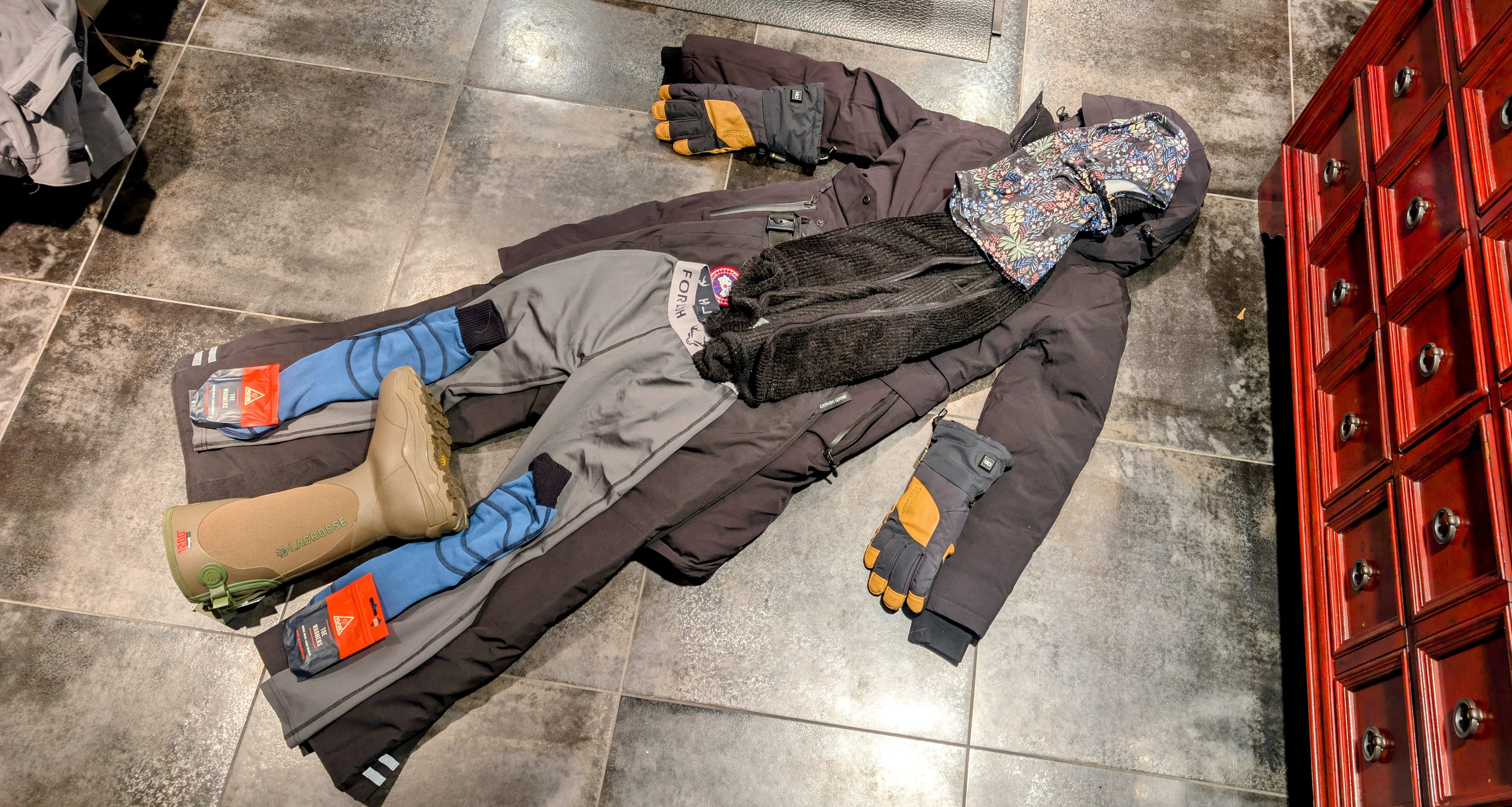
Base Layers: Forloh Deep Space ($109 top, $99 bottom)
Forloh makes everything in America using first-to-market, proprietary fabric technologies. These polyester-spandex blend base layers offer four-way stretch and lay-flat seams, in addition to a ceramic fiber coating that substantially increases their warmth. They’re warm, dry instantly, and very comfortable. They’ve kept Virginia dry and comfortable everywhere from that bear hunt off the coast of Alaska to ski slopes here in Montana. They also layer and move nicely under other stuff, making them her go-to option.
Snow Pants: Canada Goose Tundra Pant ($650)
It pained Virginia to order these, but women’s options for technical clothing are often very limited. We couldn’t find another option for a snow pant that wasn’t a ski pant, and featured a high waist and flattering fit.
They’re again made from Canada Goose’s crappy 600-fill 80:20 down of unknown origin and the basic poly-cotton shell. But they’re warm and easy to take on and off thanks to knee height zippers.
If any reader knows of a more affordable or higher quality alternative, please drop a link in comments. And Charles, if you’re reading, TFG needs to start making pants, too.
One of our friends who came on the trip layered a pair of Mountain Hardwear’s ultralight Ghost Whisperer down pants ($275) under a parka and over base layers, and reported they were reasonably comfortable so long as the wind wasn’t blowing. You could pair those with that brand’s Reduxion soft shell pant (which is more ski specific sadly) to keep weather out.
Tights: Alo Airlift Winter Warm High-Waist Legging ($138)
That Triple Fat Goose parka was long enough that, when paired with tall boots, Virginia didn’t need to wear those snow pants for hikes, cross country skiing, and round-town outings.
These tights use the same polyster-elastene blend as regular yoga tights, but are backed by a brushed fleece interior for added warmth. They’re 99 percent as flattering as normal tights, but a lot warmer. They also dry instantly and breathe well during cold weather activities. She wears these things daily during winter here in Montana too.
While going out for meals or similar, Virginia paired the tights with a Vuori tank top, under all the rest of the stuff above.
Boots: Lacrosse Alpha Agility 1200 Gram ($190)
Our Lacrosse order got delayed and we actually ended up taking along less suitable options. Virginia wore a pair of pac boots from a local company called Schnee’s that were a total pain in the ass to lace up every time we went outdoors.
But, waiting for us at home were two pairs of new Lacrosse rubber boots. And since it’s currently snowy and 16 degrees here in Bozeman, we’re able to speak to their performance.
Versus other, supposedly insulated rubber boots that rely on only neoprene for warmth, Lacrosse boots use both neoprene with the addition of Thinsulate lofted insulation around the foot. Here, there’s 5mm of neoprene, then a whopping 1,200 grams per-square meter of Thinsulate, which is more warmth than you’ll find in any other women’s boot I’m aware of (aside from the bulkier, camo-only Lacrosse Alpha Burly Pro).
Entirely waterproof all the way to the top, heavily insulated rubber boots like these are just the right choice for extreme cold conditions. They utterly eliminate the potential for conductive heat loss with the cold ground, are easy to take on and off, prove comfortable to walk in, and dry quickly if any sweat accumulates or snow gets inside.
Socks: Lorpen T3+ Inferno Biowarmer ($70)
I’ve become a huge fan of Spanish sock brand Lorpen’s T3 range of high tech socks. And I wanted Virginia to benefit too, so I tracked down a few pairs of their latest ultra-warm sock ahead of this winter, and imported them from Europe. Some other versions can now be found on Amazon and other online retailers.
These sandwich a layer of Primaloft Bio lofted insulation between outer and inner skins of ultra smooth Sensil BioCare. They’re thick, but slip easily into and out of boots, while remaining all day comfortable and quick drying.
Stick some Ignik chemical Toe Warmers on top of the Lorpens, slide inside the Lacrosse rubber boots, and your feet will be warm, dry, and comfortable no matter what.
Virginia said I should also mention Bombas’ $22 merino-blend calf socks, which she wore during travel and casual activities. They fit under normal fashion boots and still offer a lot of warmth for things like walking between airplanes and terminals in uninsulated boots while it’s -30F.
Gloves: Outdoor Research Prevail Heated Gloves ($340)
The advantage a heated glove offers, even if your hands don’t tend to run cold, is the ability to quickly and easily warm your hands back up should they get cold. And since you’ll be taking your gloves on and off to take photos, operate zippers, adjust goggles, etc, that’s invaluable in extremely cold weather.
The advantages OR gloves offer over cheaper options are quality and reliability. I’ve had a pair of their heated mittens since 2016 that still work and look like new. Just expect to replace the $50 batteries every other year or so.
OR gloves also run a little on the small side, so size up one size. And seriously, warm hands are worth more than what these things cost.
Balaclava: Skida ($40)
Skida makes a great range of women’s cold weather accessories. Their balaclavas are made from a quick-drying poly-spandex blend treated with antimicrobial and hydrophobic coatings. Below zero, you can’t have any skin exposed, so accessories like this are key to remaining comfortable and safe.
Neck Gaiter: Sitka ($50)
Sitka packs a ton of high-pile fleece under a smooth exterior face for its neck gaiters, which are available in plain colors. They’re bulky, but also ridiculously warm if your other layers leave room for one.
Hat: Janessa Leone Piper Beanie ($97)
Made from Alpaca wool, which versus wool has more hollow fibers for more warmth, and is also soft like merino, this is just a good solid beanie that’s fashionable, but also technically meritorious.
Another good option for women's puffy pants, if you can stand camo, would be these guys from Forloh: https://forloh.com/collections/womens-outdoor-pants/products/womens-thermoneutral-down-pant?variant=32311206019156
While they don't have a membrane, the shell fabric is very thick and will do a good job of cutting the wind, while remaining breathable.
Thank you for thorough review, really helpful to make static conditions more enjoyable for all. That said, I may disagree on Canada goose quality. Their parka I bought over 10 years ago for about 1k, as a walking commute alternative to a car, still keeps me warm ice fishing all day in -20F with minimum layers underneath. I give it a proper down wash every year and it continues to have no problem dealing with Midwestern polar fortexes.